How to Tell if Your AC Capacitor May Be Failing Before a Full Breakdown: HVAC Contractor Warning Signs in Charleston
What You'll Learn
- Spot early capacitor symptoms before a no-cool breakdown
- Understand what hard starts and humming can mean
- Know when intermittent cooling needs prompt diagnosis
- Reduce the risk of sudden shutdowns in peak heat
- See when to call an HVAC contractor in Charleston
When an air conditioner quits on a hot day, the problem often did not begin that day. In many cases, a failing capacitor gives off warning signs first. For property owners who rely on an HVAC contractor in Charleston, knowing those signs can help you act before a complete loss of cooling leaves your home or commercial space uncomfortable. Capacitors play a critical role in helping motors start and run properly, so when one weakens, the system may still operate for a while, but not reliably.
This guide explains what to watch for, why the symptoms matter, and when it is time to schedule a professional diagnosis. If you want a broader planning framework, you can also review this guide to making smarter HVAC decisions and a practical HVAC guide for property owners. Both support the same goal: preventing small warning signs from turning into expensive disruption.
What an AC Capacitor Does and Why It Matters
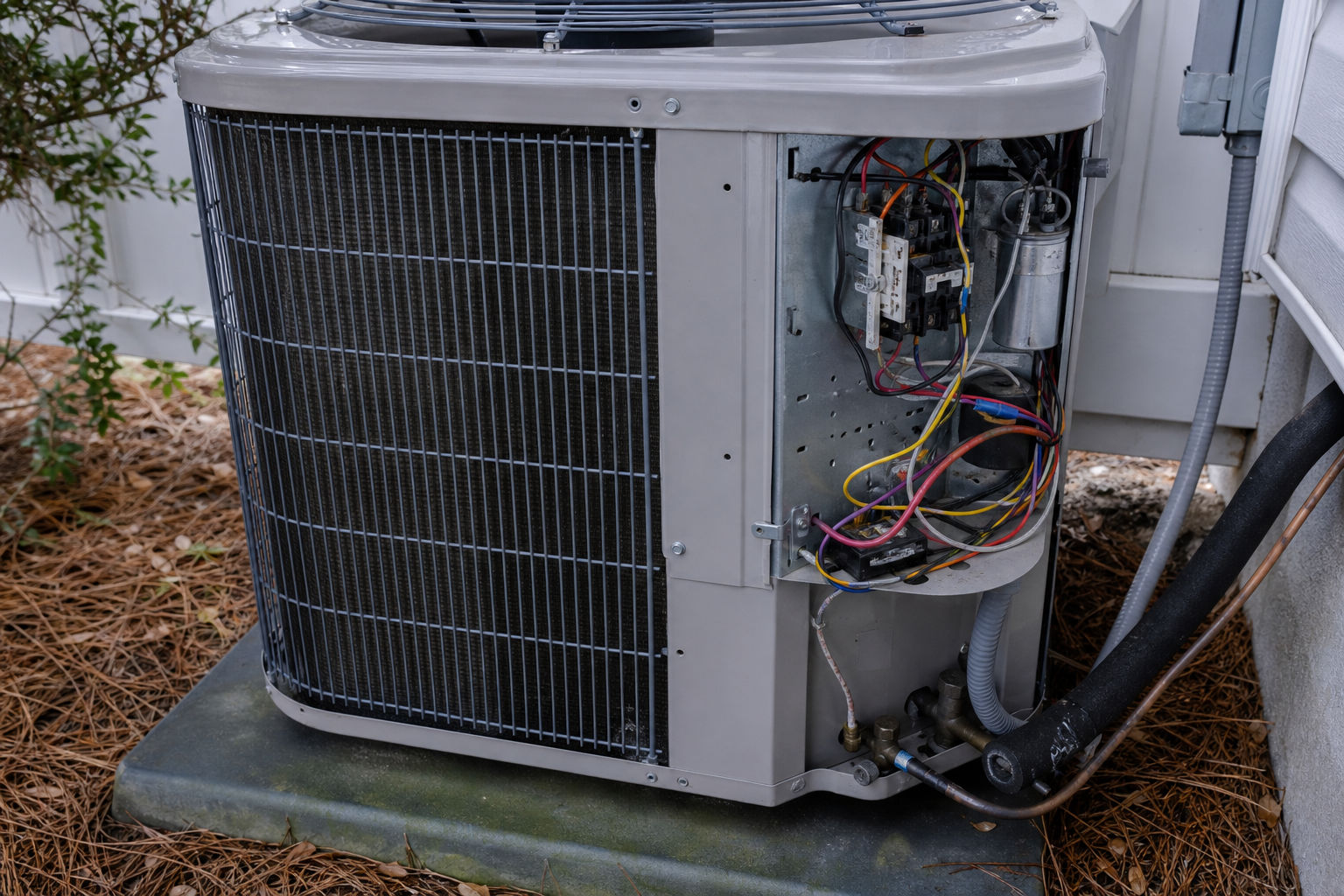
An AC capacitor stores and releases electrical energy to help key components start and keep running. When the capacitor begins to fail, the compressor or fan motor may struggle to start, draw power inefficiently, or shut down unexpectedly. That is why a capacitor issue can look like several different comfort problems at once. A trusted HVAC contractor in Charleston will look at the full operating pattern instead of assuming every no-cool complaint has the same cause.
Capacitors do not always fail instantly. Heat, age, voltage fluctuations, and long daily runtime can gradually weaken them. That makes early detection especially important during heavy cooling demand. For more context on system reliability, see how to keep your HVAC system reliable and ready for every season and this local guide to better comfort and smarter repair decisions.
Early Warning Sign #1: Hard Starts
One of the most common signs of a weakening capacitor is a hard start. Instead of starting smoothly, the AC may hesitate for a few seconds before it kicks on. You might notice the outdoor unit trying to start, pausing, and then finally engaging. That delay can indicate the capacitor is no longer providing the boost the motor needs. An experienced HVAC contractor in Charleston will treat this as an early warning, not a symptom to ignore.
Hard starts matter because repeated strain on motors can lead to more than one failed part. Waiting too long can increase wear on the compressor, which is a much more serious repair scenario. If your system seems slower to start than usual, it is wise to have it checked while the issue is still limited. This is also a good time to read how to know when your AC needs diagnostics before a bigger repair, since startup issues often overlap with broader performance problems.
Early Warning Sign #2: Humming Without Normal Operation
If you hear a humming sound but the system does not fully start or cool the space correctly, a weak capacitor may be involved. Humming can happen when the unit is receiving power but the motor cannot start the way it should. Some owners describe it as the system sounding like it wants to run but never fully gets there. That is a classic reason to contact an HVAC contractor in Charleston before the unit stops responding altogether.
It is important not to keep forcing the system to run when this happens. Repeated attempts can increase electrical and mechanical stress. If the humming is paired with weak airflow, delayed startup, or inconsistent temperatures, professional testing is the safest next step. Property owners dealing with coastal operating conditions may also benefit from learning how salt air and coastal humidity affect AC performance in Charleston homes, because environmental conditions can accelerate wear on electrical components.
Early Warning Sign #3: Intermittent Cooling
A failing capacitor does not always stop cooling all at once. Sometimes the system cools normally in the morning, struggles in the afternoon, and then seems to recover later. That stop-and-start pattern is easy to dismiss, especially if the unit is still producing some cool air. But intermittent cooling often means the system cannot maintain stable operation under heavier demand. A qualified HVAC contractor in Charleston can determine whether the capacitor is weakening or whether another electrical issue is contributing.
This symptom can also show up as uneven comfort, with some areas feeling acceptable while others become warm. While multiple issues can cause that pattern, unstable AC operation is one possibility. If room temperatures have become inconsistent, it may help to compare your symptoms with this explanation of why some rooms stay hot while the rest of the house feels cool. The key is not to assume intermittent cooling is harmless just because the system occasionally bounces back.
Early Warning Sign #4: Sudden Shutdowns
Another red flag is an AC that starts, runs briefly, and then shuts off unexpectedly. Sudden shutdowns can happen when electrical components overheat or cannot maintain proper operation. In capacitor-related cases, the system may appear to restart later, which can create a false sense that the problem has resolved itself. In reality, that temporary recovery often means the failure is progressing. Calling an HVAC contractor in Charleston at this stage can help prevent being left without cooling when you need it most.
Shutdowns should be taken especially seriously during periods of nonstop summer use. Systems under continuous demand have less margin for weak electrical parts. If you are trying to reduce the chance of a mid-season breakdown, review how to prepare your HVAC system for 24/7 summer demand. Preventive attention is often the difference between a manageable repair visit and an emergency comfort problem.
What Property Owners Should Do Next
If you notice hard starts, humming, intermittent cooling, or sudden shutdowns, the best next step is a professional inspection. Capacitors involve electrical testing, and symptoms can overlap with other component issues. A proper diagnosis helps confirm the real cause and prevents unnecessary guesswork. For anyone evaluating who to trust with the work, this article on choosing an HVAC contractor in Charleston offers useful guidance on what to look for in a repair partner.
- Pay attention to delayed starts or a unit that struggles to turn on
- Do not ignore humming sounds paired with weak or inconsistent cooling
- Watch for cooling that comes and goes during hotter parts of the day
- Treat sudden shutdowns as a warning that the problem may be escalating
- Schedule professional diagnostics instead of waiting for a complete failure
Preventive Repairs Help You Avoid Peak-Heat Breakdowns
Capacitor problems are a good example of why preventive HVAC repair matters. The earlier you respond to small operating changes, the better your chances of avoiding a total outage. That is especially true for homeowners and business owners who depend on steady indoor comfort through long periods of heat. An experienced HVAC contractor in Charleston can identify whether the issue is minor and timely to address now, rather than risky to postpone.
If your AC has been showing any of these warning signs, do not wait for the day it stops cooling completely. First Call Heating & Cooling helps property owners make informed repair decisions with clear diagnostics and practical recommendations. When you need an HVAC contractor in Charleston, acting early on capacitor symptoms can protect comfort, reduce stress, and lower the odds of a full breakdown at the worst possible time.
Source: air conditioning guidance from the U.S. Department of Energy
Frequently Asked Questions
The website does not provide a formal owner biography, but customer testimonials repeatedly reference Steven as the primary technician or service contact. Reviews describe him as responsive, knowledgeable, personable, reliable, patient in answering questions, and committed to standing behind his work. Customers also mention that he explains problems clearly, responds to emergencies quickly, and follows up after service.
- Owner: Steven
- Air conditioning contractor serving Charleston
- Specialized in air conditioning repair service
- Offers air duct cleaning service
- Provides HVAC and heating contractor services