
How Salt Air and Coastal Humidity Affect AC Performance in Charleston Homes
What You'll Learn
- See how salt air speeds up AC corrosion near the coast
- Learn why humidity can reduce cooling efficiency
- Understand maintenance steps that help equipment last longer
- Know when coastal homes need more frequent AC service
- Find practical ways to protect indoor and outdoor components
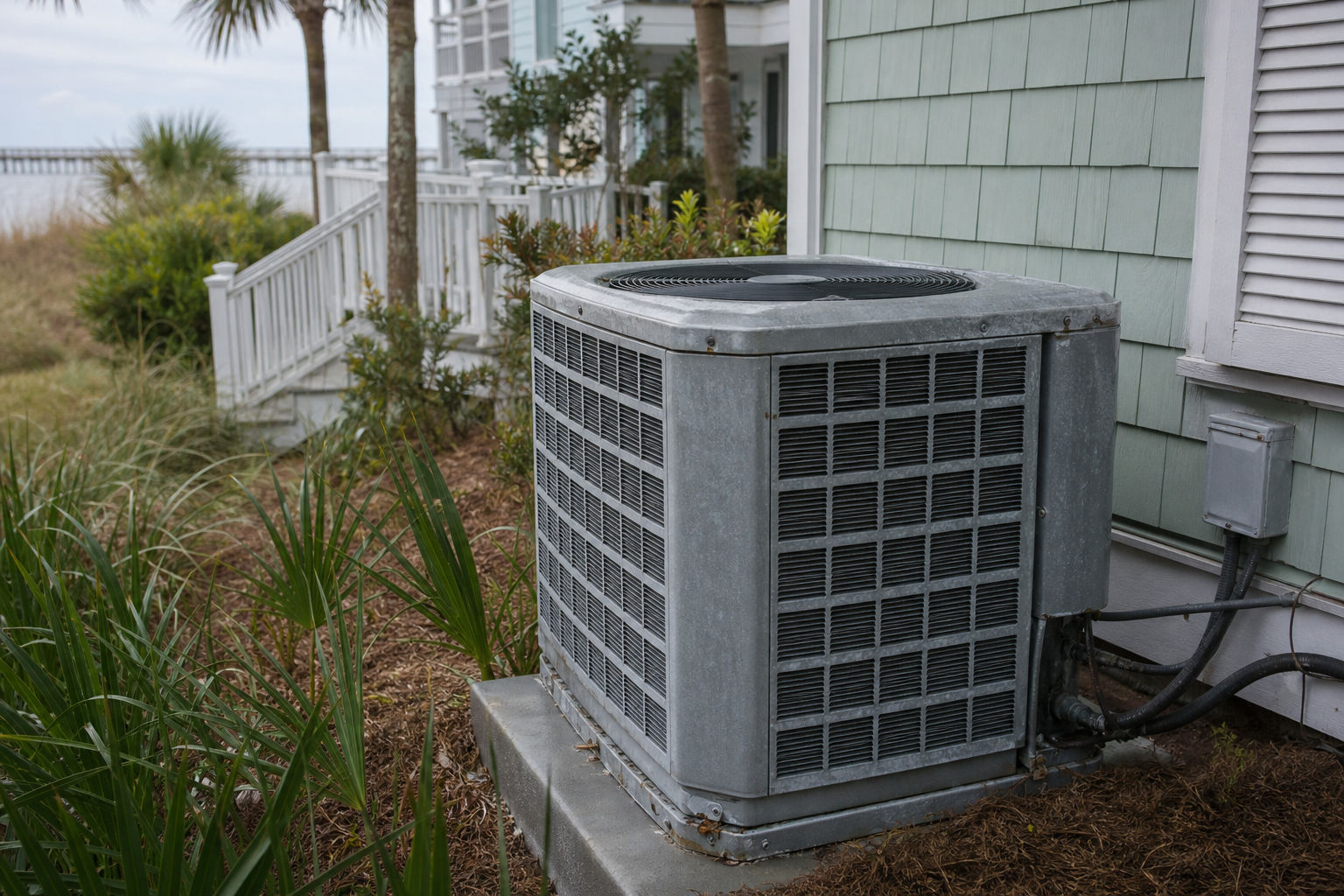
In Charleston-area communities, air conditioning systems do more than handle summer heat. They also fight a constant mix of coastal humidity, airborne salt, and long cooling seasons that can push equipment harder than many homeowners expect. In places like Isle of Palms, Sullivan’s Island, and Folly Beach, outdoor condensers are regularly exposed to salt-laden air that can attack metal parts, while indoor components work overtime to remove moisture from the air. The result is often a system that loses efficiency sooner, needs more repairs, and may not last as long as the same equipment installed farther inland.
For homeowners and business owners in Charleston, Mount Pleasant, and Johns Island, understanding how the local environment affects AC performance can help you make better maintenance decisions. Coastal wear is not always dramatic at first. It often starts with small issues such as rust on cabinet panels, weakened electrical connections, dirty coils, or reduced airflow. Left unaddressed, those problems can lead to higher energy bills, weaker cooling, and breakdowns during the hottest part of the season.
Why coastal conditions are harder on air conditioners
Air conditioners rely on clean heat-transfer surfaces, stable electrical components, and consistent airflow to operate efficiently. Along the coast, salt particles carried by ocean breezes settle on the outdoor unit and begin to corrode exposed metals. Condenser coils, fasteners, fan housings, and electrical terminals can all be affected. Even homes that are not directly on the beach, including properties in West Ashley or Daniel Island, may still experience some degree of salt exposure depending on wind patterns and proximity to tidal areas.
Humidity adds another layer of stress. Your AC does not just cool the air; it also removes moisture. When outdoor humidity stays high for long periods, the system runs longer cycles to maintain comfort indoors. That extra runtime increases wear on motors, capacitors, contactors, and compressors. If the equipment is already struggling because of corrosion or restricted coils, the performance drop becomes even more noticeable. Homeowners often first notice this as uneven temperatures, longer run times, or the kind of utility increase discussed in Why Your Energy Bills Spike in Summer Even When Your AC Seems Fine.
How salt air causes corrosion and efficiency loss
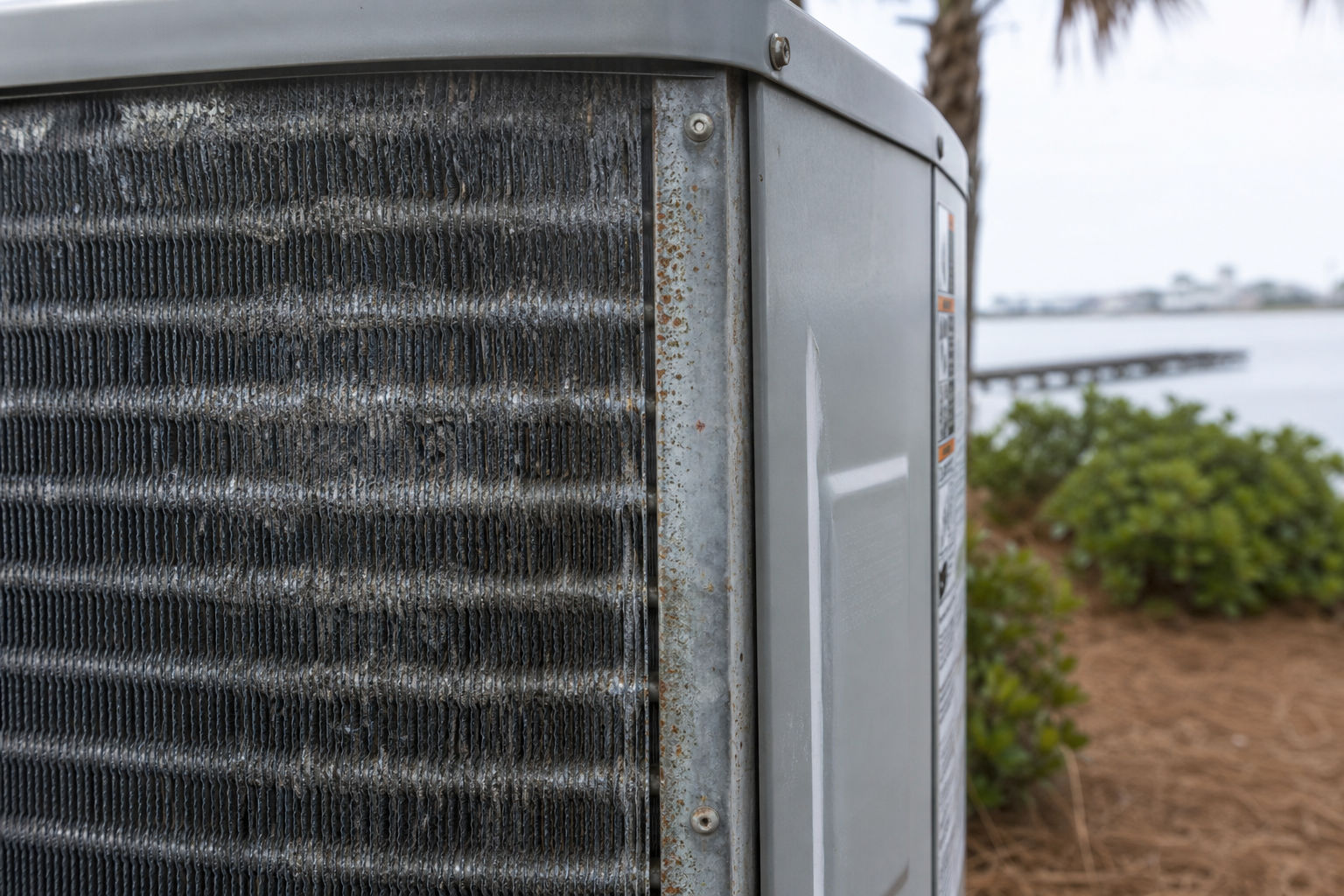
Salt is especially damaging because it accelerates oxidation. On an outdoor condenser, that can show up as coil fin deterioration, rust on screws and panels, and corrosion at wire connections. As coil surfaces degrade or become coated with grime and salt residue, the system cannot reject heat as efficiently. The compressor then has to work harder to reach the thermostat setting, which increases energy use and can shorten compressor life.
Corrosion can also create reliability issues that are easy to miss until a failure occurs. Electrical terminals may weaken, contactors may pit or stick, and refrigerant coil damage can eventually contribute to leaks. If a system starts making unfamiliar sounds while operating, corrosion-related wear may be part of the issue. For a closer look at warning sounds, see What Strange AC Noises Mean and When to Call for Repair.
What humidity does inside the system
High humidity affects more than comfort. It influences indoor air quality, drainage, and evaporator performance. As your AC pulls moisture from indoor air, condensate must drain away properly. In Charleston’s humid climate, drain lines can clog more easily with algae or buildup, especially when systems run almost nonstop in summer. Excess moisture around the evaporator coil can also contribute to biological growth and odors, which is one reason some homeowners notice issues like those covered in Why Your AC Smells Musty When It Turns On and What It May Signal.
Humidity also makes comfort harder to achieve if the system is not performing correctly. A home can reach the thermostat setpoint yet still feel sticky if moisture removal is poor. Dirty coils, low airflow, oversized equipment, or deferred maintenance can all contribute. In coastal settings such as Sullivan’s Island and Folly Beach, these issues may appear sooner because the AC spends so much time dealing with moisture-heavy air.
Signs your coastal AC system may be under stress
- Visible rust or corrosion on the outdoor unit
- Longer cooling cycles or difficulty keeping up in the afternoon
- Higher summer electric bills without a clear cause
- Warm spots indoors or weak airflow from vents
- Frequent capacitor, contactor, or fan motor problems
- Musty smells, excess moisture, or drain line backups
Some of these symptoms can overlap with common AC problems, so it helps to rule out the basics first. Homeowners can review simple checks like thermostat settings, filter condition, and breaker status before scheduling service by reading What Charleston Homeowners Should Check Before Calling for AC Repair. If the unit is near the ocean and problems keep returning, however, environmental exposure may be the bigger story.
Maintenance steps that help protect AC equipment near the coast
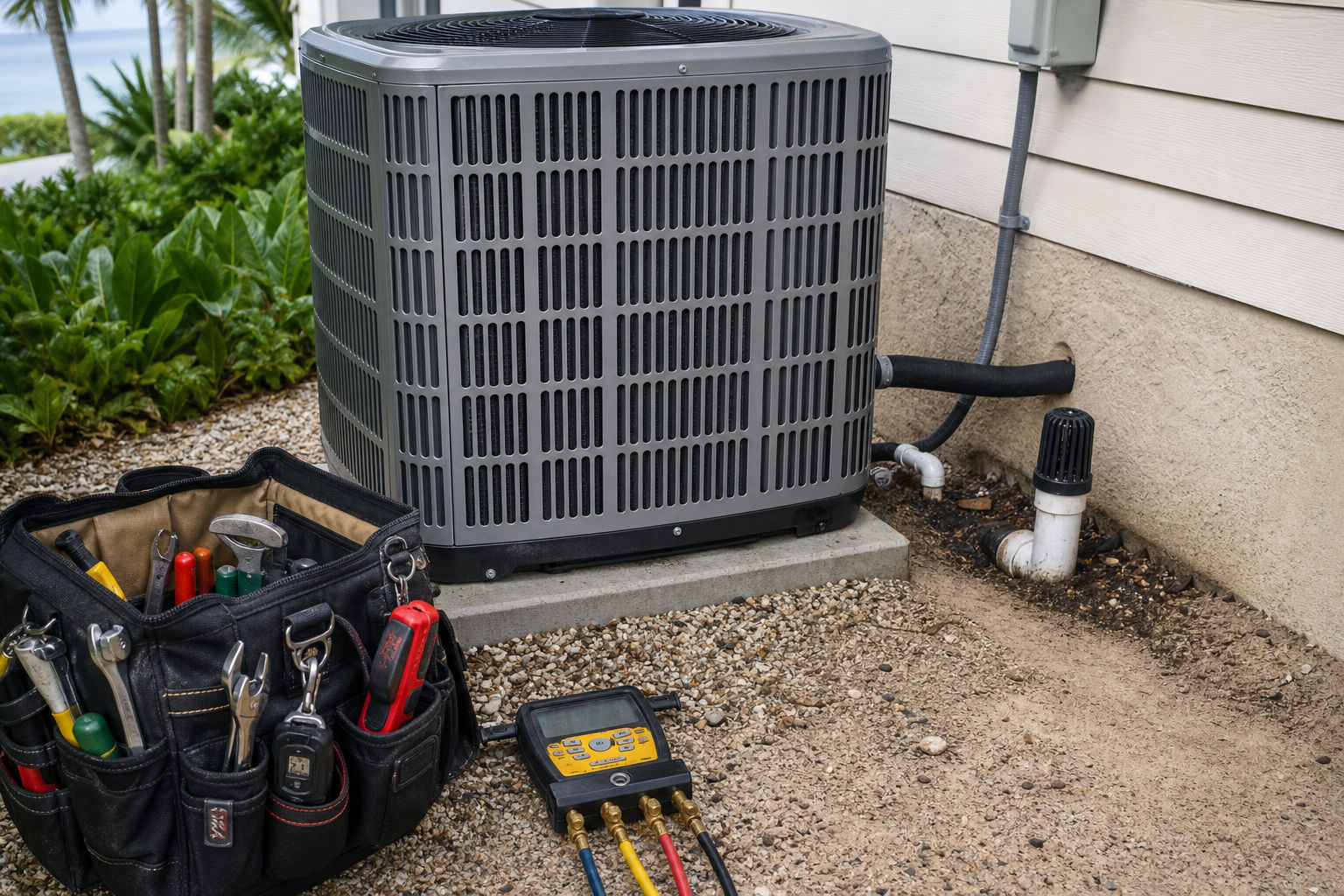
Coastal systems typically need a more proactive maintenance plan than inland systems. The goal is not just to fix breakdowns, but to slow corrosion, maintain heat transfer, and catch small failures before they become expensive repairs. Professional service should include cleaning the condenser coil, checking electrical components for corrosion, inspecting refrigerant performance, clearing the condensate drain, and verifying airflow across both the indoor and outdoor sections.
- Replace or check air filters regularly to support airflow and moisture removal.
- Keep the outdoor unit clear of debris, vegetation, and heavy buildup around the coil.
- Schedule coil cleaning to remove salt residue, dirt, and other contaminants.
- Have electrical connections inspected for corrosion before they fail during peak demand.
- Ask about protective coatings or coastal-rated equipment options when replacing a system.
Routine service becomes even more important before the hottest months arrive. A system entering summer with dirty coils or weakened electrical parts is far more likely to struggle through extended runtime. For seasonal planning, homeowners in North Charleston, Summerville, and Goose Creek can also review How to Prepare Your HVAC System for 24/7 Summer Demand in the Charleston Area.
Service strategies for homes in Isle of Palms, Sullivan’s Island, and Folly Beach
Beachside and near-beach properties often need service strategies tailored to exposure levels. Homes directly on or near the water may benefit from more frequent inspections than homes farther inland in Hanahan, Ladson, or Moncks Corner. Technicians should pay close attention to condenser condition, coil cleanliness, cabinet integrity, fan operation, and low-voltage electrical components. These are often the first places where salt-related deterioration appears.
When replacement becomes necessary, contractor selection matters. Not every installation approach is equally suited to coastal conditions. Equipment placement, accessibility for cleaning, drainage design, and the use of corrosion-resistant materials can all influence long-term performance. If you are comparing companies for repair or replacement, How to Choose an HVAC Contractor in Charleston for AC Repair or Replacement can help you evaluate your options.
Protecting comfort and system life in the Charleston area
Charleston’s coastal climate is tough on air conditioning equipment, but the right maintenance approach can make a meaningful difference. Regular cleaning, timely inspections, and early repair of corrosion-related issues help preserve efficiency and reduce the chance of midsummer breakdowns. For property owners in Charleston, Mount Pleasant, Isle of Palms, Sullivan’s Island, Folly Beach, and surrounding communities, the best strategy is to treat coastal exposure as an ongoing operating condition rather than an occasional problem.
First Call Heating & Cooling helps homeowners and local business owners protect their cooling systems with professional AC repair, maintenance, and HVAC service throughout the Charleston area. If your system is running longer, cooling less effectively, or showing signs of corrosion, scheduling service early can help prevent more serious damage and keep your property comfortable through the most humid parts of the year.
Source: maintaining your air conditioner