What Strange AC Noises Mean and When to Call for Repair
What You'll Learn
- Identify common AC noises and the problems they may signal
- Know which sounds need fast professional attention
- Learn how early repairs can prevent major system damage
- Understand when a noisy AC affects comfort and efficiency
- See why local service matters for Charleston-area properties
Air conditioners are not supposed to be silent, but they also should not suddenly start making sharp, repetitive, or unsettling sounds. A normal system may produce a brief startup hum, steady airflow, and a soft click as it cycles on or off. When that familiar sound changes into buzzing, rattling, squealing, banging, or constant clicking, it often means a component is loose, worn, obstructed, or failing. For homeowners and business owners in Charleston, North Charleston, and Mount Pleasant, recognizing those early warning signs can be the difference between a manageable repair and a much more expensive breakdown during peak heat.
At First Call Heating & Cooling, strange AC noises are one of the most common reasons customers schedule service. The sound itself does not always reveal the exact failed part, but it does narrow the problem quickly. Noise can point to electrical issues, fan problems, damaged motors, loose hardware, compressor trouble, or debris inside the outdoor unit. If your system is also running longer than usual, struggling to cool, or causing bills to climb, those symptoms may connect to the same underlying issue. In some cases, a noisy unit may also overlap with problems discussed in Why Your Charleston-Area AC Runs Constantly but Still Struggles to Cool or Why Your Energy Bills Spike in Summer Even When Your AC Seems Fine.
Why unusual AC sounds should not be ignored
Air conditioning systems rarely fix themselves. A small vibration can loosen hardware further. A failing capacitor can strain a motor. A worn belt or bearing can damage nearby parts if operation continues. Even something simple, like a stick caught in the condenser fan, can escalate if the blade becomes bent or the motor overheats. That is why unusual sound is often one of the earliest and most useful clues your HVAC system gives you.
In coastal and inland communities like Summerville, West Ashley, and Johns Island, AC systems already work hard against heat, humidity, salt air, and long cooling seasons. Delaying service after a new noise starts can shorten equipment life and raise the chance of a complete shutdown at the worst time. If the noise is sudden, loud, or accompanied by burning smells, reduced airflow, or frequent cycling, it is best to turn the system off and arrange professional inspection.
What a buzzing AC sound may mean
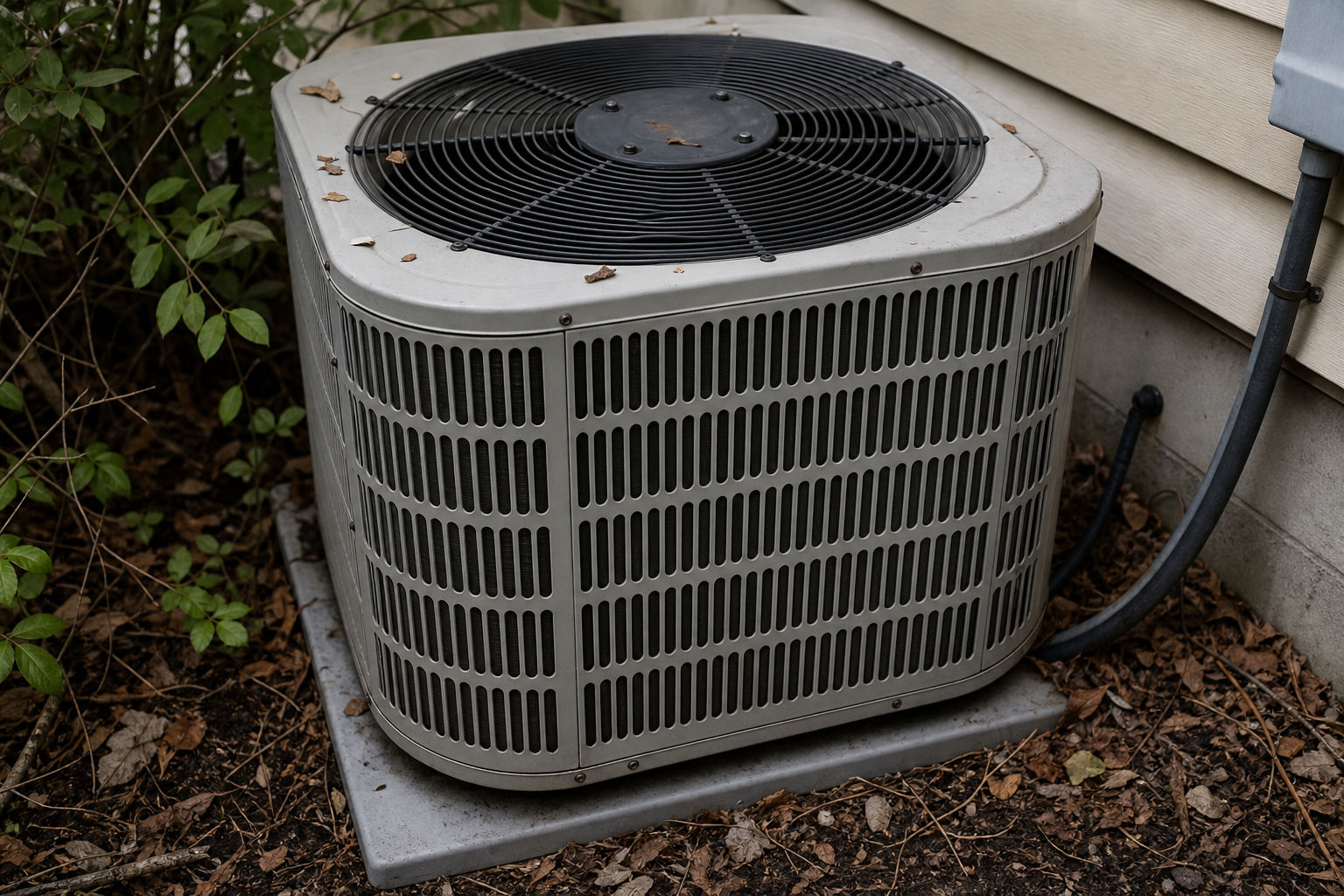
A buzzing sound often points to an electrical or mechanical issue. Common causes include a failing capacitor, loose wiring, a contactor problem, debris near the outdoor unit, or a condenser fan motor that is struggling to start or run properly. Refrigerant issues can also create sounds that some owners describe as buzzing or humming, especially when performance has dropped at the same time.
If the buzzing comes from the outdoor unit, do not ignore it. Electrical components can degrade further with continued operation, and a hard-starting motor may eventually stop altogether. If your AC is buzzing and also turning on and off too often, that may relate to short cycling. For more context, see Why Your Charleston-Area AC Is Short Cycling and What It Could Mean. A technician can test electrical parts safely and determine whether the issue is isolated or part of a larger system problem.
What rattling usually points to
Rattling is frequently caused by something loose. Screws, access panels, fan blades, mounting hardware, and internal components can all vibrate as the system runs. In other cases, leaves, pebbles, twigs, or other debris may have entered the outdoor condenser. Ductwork can also rattle if sections are poorly secured or expanding and contracting under airflow and temperature changes.
While some rattles start as minor fixes, they should still be inspected. A loose part can shift into a moving assembly and cause more serious damage. If the rattle is paired with a musty odor, restricted airflow, or visible dirt buildup, there may be multiple issues affecting operation. Homeowners who notice odor along with sound may also want to read Why Your AC Smells Musty When It Turns On and What It May Signal.
What squealing or screeching can signal
Squealing usually suggests a motor-related issue. Depending on the system type and age, the sound may come from worn bearings, a failing blower motor, belt problems, or excessive friction in a moving component. High-pitched screeching can be especially important because it often indicates a part under stress. The longer that component runs, the greater the risk of total failure.
If the noise begins inside near the air handler or furnace cabinet, the blower assembly is a likely area to inspect. If it comes from outside, the condenser fan motor may be involved. Because squealing is often tied to wear and heat buildup, waiting can turn a repairable motor issue into a replacement need. This is one of the clearest examples of why early diagnosis saves money and downtime for both homes and commercial spaces in Goose Creek, Hanahan, and Daniel Island.
What banging or clanking may indicate
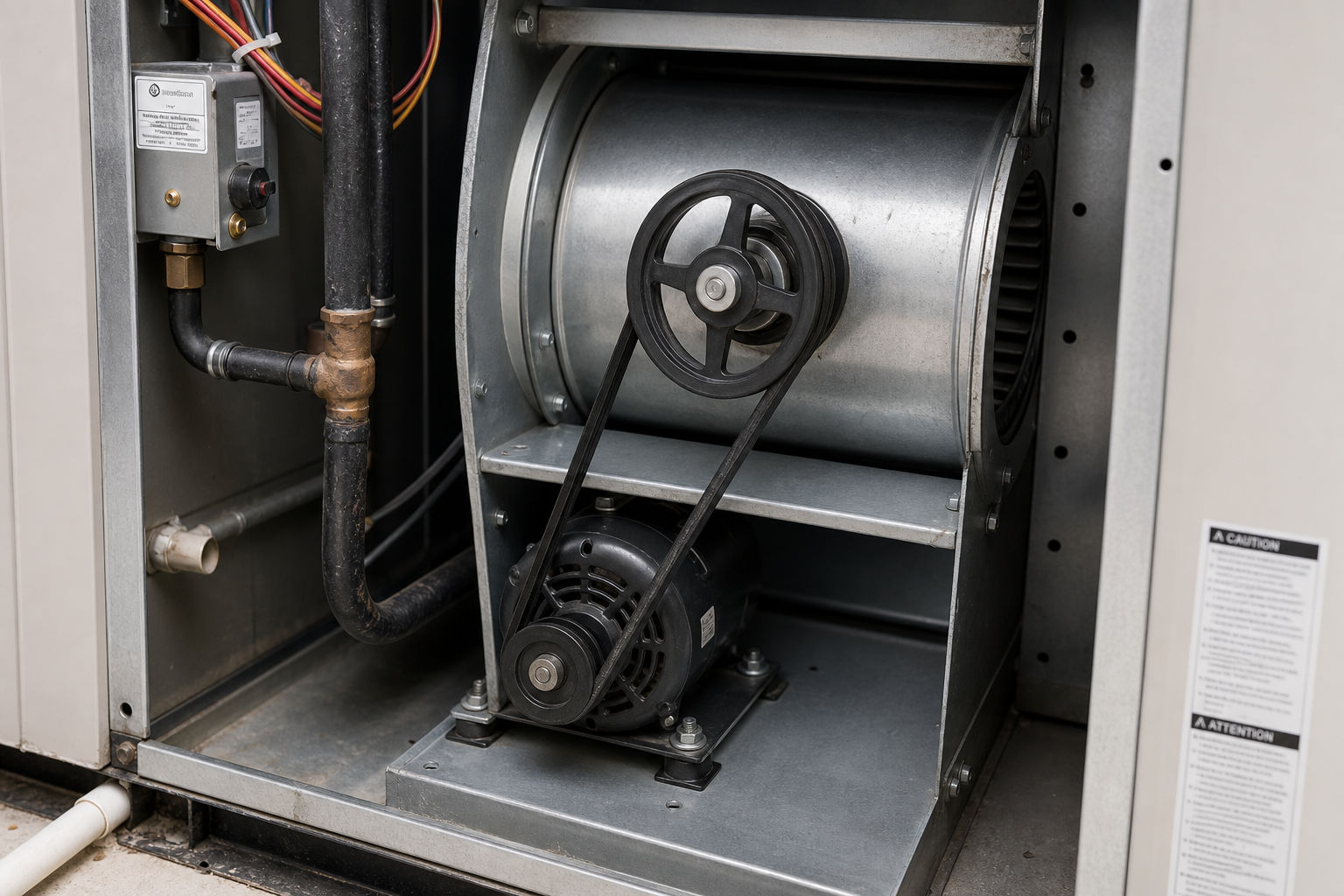
Banging is one of the more serious AC sounds. It can mean a loose or broken part is moving around inside the unit, such as a blower component, connecting hardware, or a damaged fan assembly. In some cases, owners describe compressor-related problems as banging or clanking, particularly when startup becomes rough or internal components are failing.
If you hear banging, it is wise to shut the system down and call for service. Continued operation can cause collateral damage very quickly. A component that has come loose can strike nearby parts, bend fan blades, damage the cabinet, or strain the motor. Loud metal-on-metal sounds are rarely something to monitor for a few more days. They are a sign to act now.
What repeated clicking means
A single click at startup or shutdown is often normal. Repeated clicking, however, can indicate a thermostat communication issue, a failing relay, a bad capacitor, or another electrical control problem. If the system keeps trying to start but does not fully run, the clicking may be the sound of an unsuccessful call for cooling.
This kind of issue can leave your property uncomfortable while also putting extra stress on motors and control components. If the AC is clicking constantly and not cooling correctly, scheduling service promptly is the safest move. And if the system stops during extreme heat in places like Isle of Palms, Sullivan's Island, or Folly Beach, emergency service may be appropriate. For that scenario, see What to Expect From a 24/7 Emergency AC Repair Visit in the Charleston Area.
When to call for AC repair right away
- The noise is loud, sudden, or getting worse quickly
- Your AC is not cooling properly or airflow has dropped
- The system is short cycling or struggling to start
- You notice burning smells, musty odors, or signs of moisture
- The outdoor unit is shaking or the indoor unit is screeching
Many property owners wait because the system is still running. That can be a costly mistake. A noisy AC that still cools today may fail completely tomorrow, often during the hottest part of the week when repair demand is highest. Prompt service helps protect comfort, reduce strain on the system, and prevent avoidable damage to expensive components.
Why local diagnosis matters
Not every AC noise has the same cause, and online guesses can only go so far. A professional HVAC inspection looks at the full system, including electrical performance, fan operation, refrigerant conditions, airflow, drain function, and overall wear. That matters in the Charleston area, where humidity, salt exposure, and long runtime can create conditions that affect equipment differently from other regions.
First Call Heating & Cooling serves property owners across Charleston, North Charleston, Mount Pleasant, Summerville, James Island, Goose Creek, Hanahan, West Ashley, Isle of Palms, Sullivan's Island, Ravenel, Daniel Island, Moncks Corner, Ladson, Folly Beach, Wando, and Johns Island. If your AC has started making unusual sounds, a timely inspection can help identify the source, explain the repair clearly, and keep a smaller issue from turning into a major system failure. If you are comparing companies before scheduling, How to Choose an HVAC Contractor in Charleston for AC Repair or Replacement offers a practical guide to what to look for.
Source: air conditioning guidance