
Why Your AC Smells Musty When It Turns On and What It May Signal
What You'll Learn
- Learn the most common causes of musty AC odors in humid climates
- Know when a smell is a maintenance issue versus a repair concern
- Understand how drain lines, coils, and ducts can create odor problems
- See what steps help prevent mildew-like smells from returning
- Know when to schedule professional AC service in Charleston
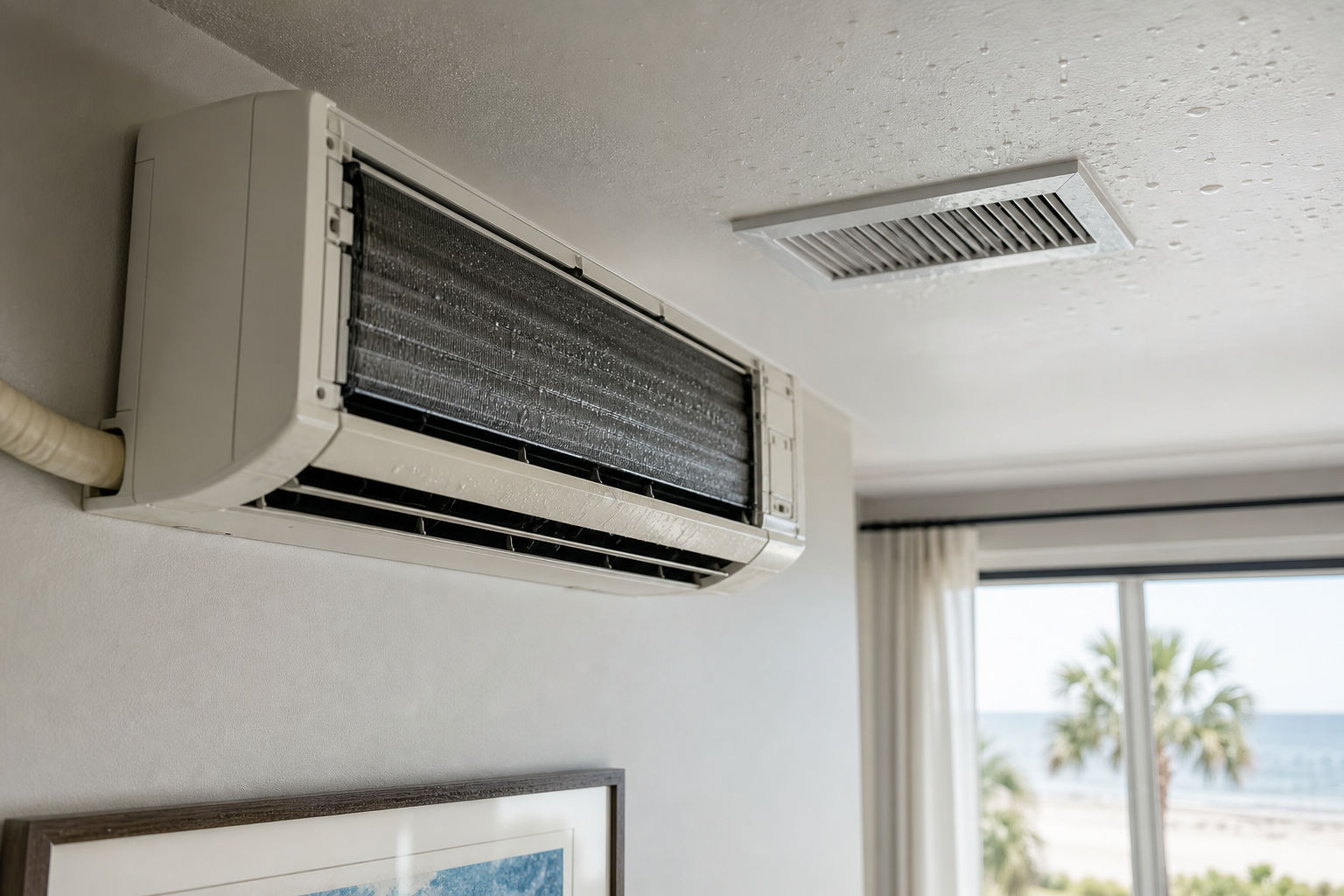
If your air conditioner smells musty when it first turns on, that odor is usually telling you something important. In the Charleston area, where humidity stays high through much of the cooling season, AC systems have to remove a lot of moisture from indoor air. When that moisture does not drain or dry properly, it can create the damp, mildew-like smell many homeowners notice in Charleston, Mount Pleasant, and Summerville homes and businesses. Sometimes the issue is routine maintenance. Other times, it points to a repair problem that should not be ignored.
A musty smell does not automatically mean your system is failing, but it does mean conditions inside the equipment or duct system may be allowing moisture, dust, and microbial growth to build up. If the odor comes and goes, gets stronger over time, or appears alongside weak airflow, short cycling, or rising utility costs, it is worth taking seriously. Problems that begin as a smell can eventually affect comfort, efficiency, and indoor air quality. If your system is also struggling to cool, you may want to read Why Your Charleston-Area AC Runs Constantly but Still Struggles to Cool.
Why musty AC odors are common in Charleston’s climate
Charleston’s coastal climate creates ideal conditions for condensation. Your AC is designed to pull humidity from the air as warm indoor air passes over the evaporator coil. That process naturally creates water. Under normal conditions, the water drains away through the condensate system. But when humidity is heavy for long stretches, any small issue with drainage, airflow, or cleaning can leave moisture sitting inside the unit longer than it should.
That is why musty smells are so common in places like West Ashley, James Island, and North Charleston. A little dust on a damp surface can become a source of odor. A partially clogged drain line can keep water from exiting efficiently. A neglected air handler closet or return area can also contribute. The smell often becomes most noticeable at startup because the system is pushing air across surfaces that have stayed damp between cycles.
What a musty smell may be signaling
1. Moisture buildup on the evaporator coil
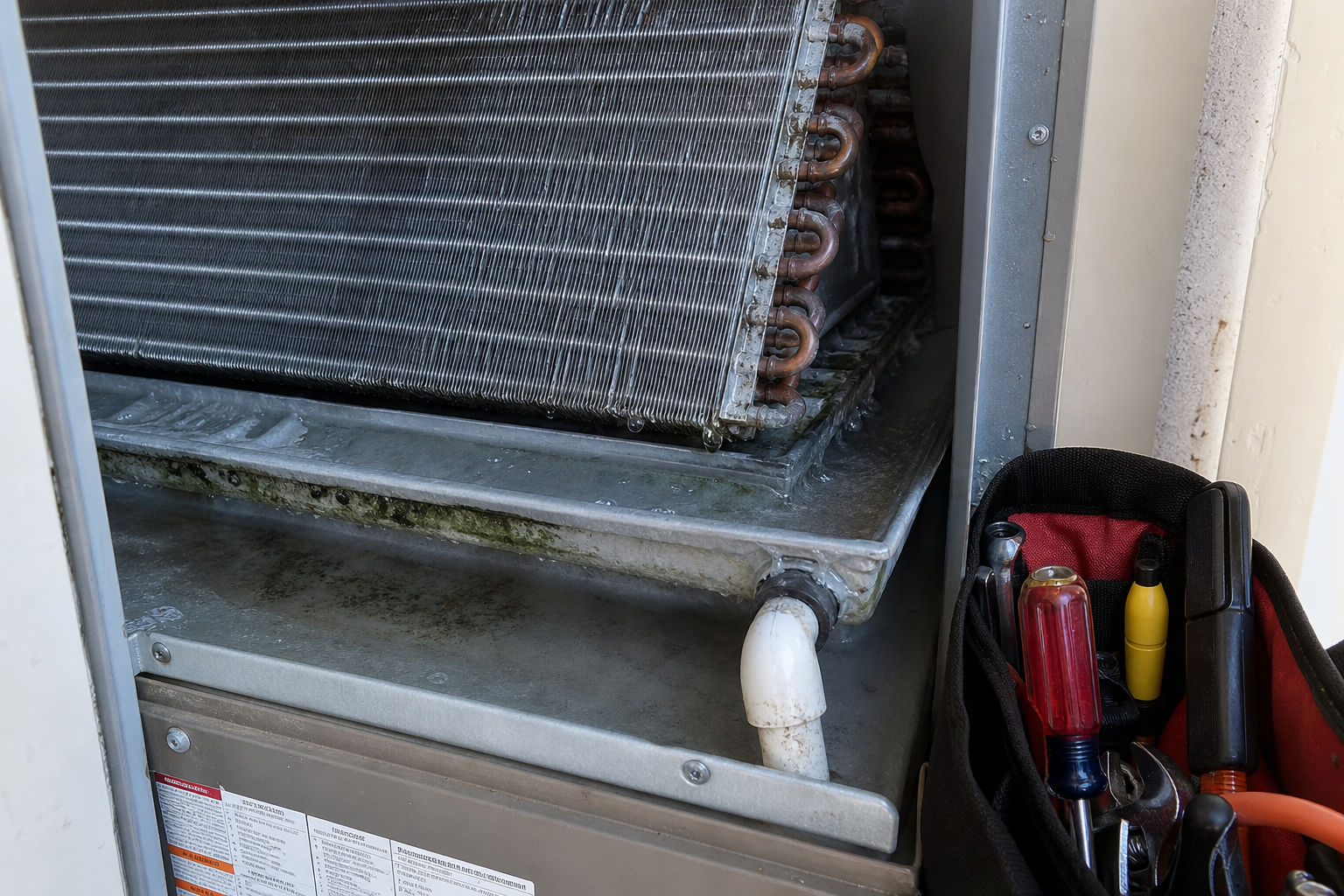
The evaporator coil is one of the most common sources of a mildew-like odor. As it removes heat and humidity, it stays wet during operation. If dust and debris collect on the coil, that damp buildup can create a stale smell each time the blower starts. In many cases, this is a maintenance-related issue, but if the coil is excessively dirty or airflow is restricted, it can also indicate a larger performance problem that needs repair.
2. A clogged or slow condensate drain line
Your AC should move condensation out of the system quickly. When the drain line is clogged with algae, sludge, or debris, water can back up into the drain pan or remain in the line. That trapped moisture often causes a musty smell and may eventually lead to overflow, water damage, or system shutdown if a safety switch is triggered. In humid areas such as Goose Creek and Hanahan, drain line issues are especially common during peak summer demand.
3. A dirty blower compartment or air handler
The smell may not be coming from the coil alone. Dust and moisture can collect around the blower wheel, insulation inside the air handler, or nearby cabinet surfaces. When the fan turns on, it pushes that odor into the living or work space. If the odor is strongest right at startup and then fades, that can be a clue that buildup inside the air handler is part of the problem.
4. Duct-related concerns
Sometimes the AC itself is not the only source. Ductwork running through humid spaces such as attics, crawl spaces, or unconditioned areas can develop condensation issues, especially if there are leaks or insulation problems. In some properties, the odor is pulled from damp surrounding areas and distributed through the vents. Older duct systems in places like Johns Island, Ladson, or Moncks Corner may be more likely to have gaps, debris buildup, or moisture-related concerns that deserve inspection.
When it is a maintenance issue and when it may be a repair problem
Some musty smells can be resolved through professional cleaning and routine maintenance. If the issue is limited to light buildup on the coil, a dirty filter, or early-stage drain line blockage, service may restore normal operation before the problem gets worse. That is one reason regular seasonal care matters. For practical prevention tips, see How to Keep Your AC Running Reliably Through a Charleston-Area Summer.
However, odors can also point to repair needs. A recurring drain line clog may indicate poor drainage design, a damaged pan, or excessive system contamination. Persistent moisture on the coil may be tied to airflow problems, a failing blower component, or other operating issues. If your system is cycling on and off too frequently, that can also worsen moisture behavior inside the equipment. Related symptoms are explained in Why Your Charleston-Area AC Is Short Cycling and What It Could Mean.

Signs you should not ignore
- The smell lasts longer than the first few minutes after startup
- You see water near the indoor unit or around the drain line
- Airflow feels weaker from one or more vents
- Indoor humidity feels unusually high even while the AC is running
- Your energy bills are rising without a clear explanation
- The system is making frequent stops and starts or struggling to cool
When these signs show up together, the problem is less likely to be cosmetic and more likely to be affecting performance. If your utility costs have climbed while the system seems to be running normally, read Why Your Energy Bills Spike in Summer Even When Your AC Seems Fine. Odor, humidity, and efficiency problems often overlap.
What homeowners and business owners can do first
Start with the basics. Check whether the air filter is overdue for replacement, and look for visible water around the indoor unit if it is safely accessible. Make note of when the smell occurs, how long it lasts, and whether it is strongest in certain rooms. This information helps narrow down whether the issue is likely inside the equipment, in the drain system, or in the ductwork.
What you should avoid is assuming the smell will simply go away on its own. In Charleston’s humid environment, moisture-related problems often get worse with time. Professional service can identify whether the system needs coil cleaning, drain line clearing, airflow correction, or a more involved repair. If the odor appears suddenly after hours or alongside a cooling failure, emergency service may be appropriate. You can learn more in What to Expect From a 24/7 Emergency AC Repair Visit in the Charleston Area.
Why professional diagnosis matters
Musty AC odors can have overlapping causes, and the right fix depends on identifying the actual source. A professional inspection can evaluate coil condition, blower cleanliness, condensate drainage, duct integrity, and system airflow. That prevents guesswork and helps avoid temporary fixes that do not address the root issue. For homeowners and local business owners choosing a company for service, How to Choose an HVAC Contractor in Charleston for AC Repair or Replacement outlines what to look for.
For properties in Charleston, Sullivan's Island, Daniel Island, Folly Beach, and surrounding communities, quick attention to a musty AC smell can help protect comfort, efficiency, and the condition of the system itself. First Call Heating & Cooling helps diagnose odor-related AC issues, from maintenance concerns to repair problems that should not be delayed. If your AC smells damp, stale, or mildew-like when it turns on, scheduling service is the best way to determine what it may be signaling and how to correct it before the problem spreads.
Source: indoor air quality guidance