Why Your Charleston-Area AC Is Short Cycling and What It Could Mean
What You'll Learn
- Learn the most common reasons an AC short cycles
- Know when short cycling points to a bigger system issue
- Understand why fast diagnosis protects comfort and equipment
- See when repair may help and when replacement may make sense
If your air conditioner turns on, runs briefly, shuts off, and then starts again a short time later, it may be short cycling. In the Charleston area, that is more than a small annoyance. During long, humid stretches in Charleston, Mount Pleasant, and Summerville, short cycling can reduce comfort, raise energy costs, and put extra strain on equipment that is already working hard. For homeowners and business owners, the key is understanding what causes the pattern and why a quick diagnosis can prevent a more expensive problem later.
An AC system is designed to run in steady cycles that cool the space, remove humidity, and then shut off once the thermostat reaches the set temperature. When cycles become too short, the system may not cool evenly or dehumidify properly. That can leave rooms feeling sticky, warm, or inconsistent from one area to another. If you are also noticing other warning signs, our guide on how to know when your HVAC system needs repair, maintenance, or replacement can help you spot the bigger picture.
What short cycling looks like
Short cycling usually means the system starts and stops more often than normal, sometimes every few minutes. You may hear the outdoor unit kick on, then shut down before the home or building feels cooler. In a business setting, this can create comfort complaints from staff or customers. In a home, you may notice hot spots, muggy air, or a thermostat that never seems to settle. Because coastal summer heat around North Charleston, West Ashley, and James Island can be intense, frequent cycling should never be ignored.
Common cause #1: Thermostat problems
One of the simplest causes is a thermostat issue. If the thermostat is poorly placed, such as near a sunny window, supply vent, kitchen heat, or other warm area, it can misread the room temperature and shut the system off too soon. Wiring problems, weak batteries, bad calibration, or a failing thermostat can also cause erratic operation. In some cases, the AC itself is fine, but the control signal is not. A professional can check whether the thermostat is reading accurately and communicating correctly with the system.
Common cause #2: Airflow restrictions
Restricted airflow is another frequent reason for short cycling. A clogged air filter, blocked return, dirty evaporator coil, collapsed duct section, or closed supply vents can change pressure and temperature conditions inside the system. That may cause the unit to overheat, trip a safety control, or cool too unevenly to run as intended. In humid coastal environments like Goose Creek, Hanahan, and Johns Island, dirty components can build up faster than many owners expect, especially during peak cooling season.
- Check whether the air filter is overdue for replacement
- Make sure supply and return vents are not blocked by furniture
- Look for weak airflow in one or more rooms
- Notice whether the system seems to run louder than usual
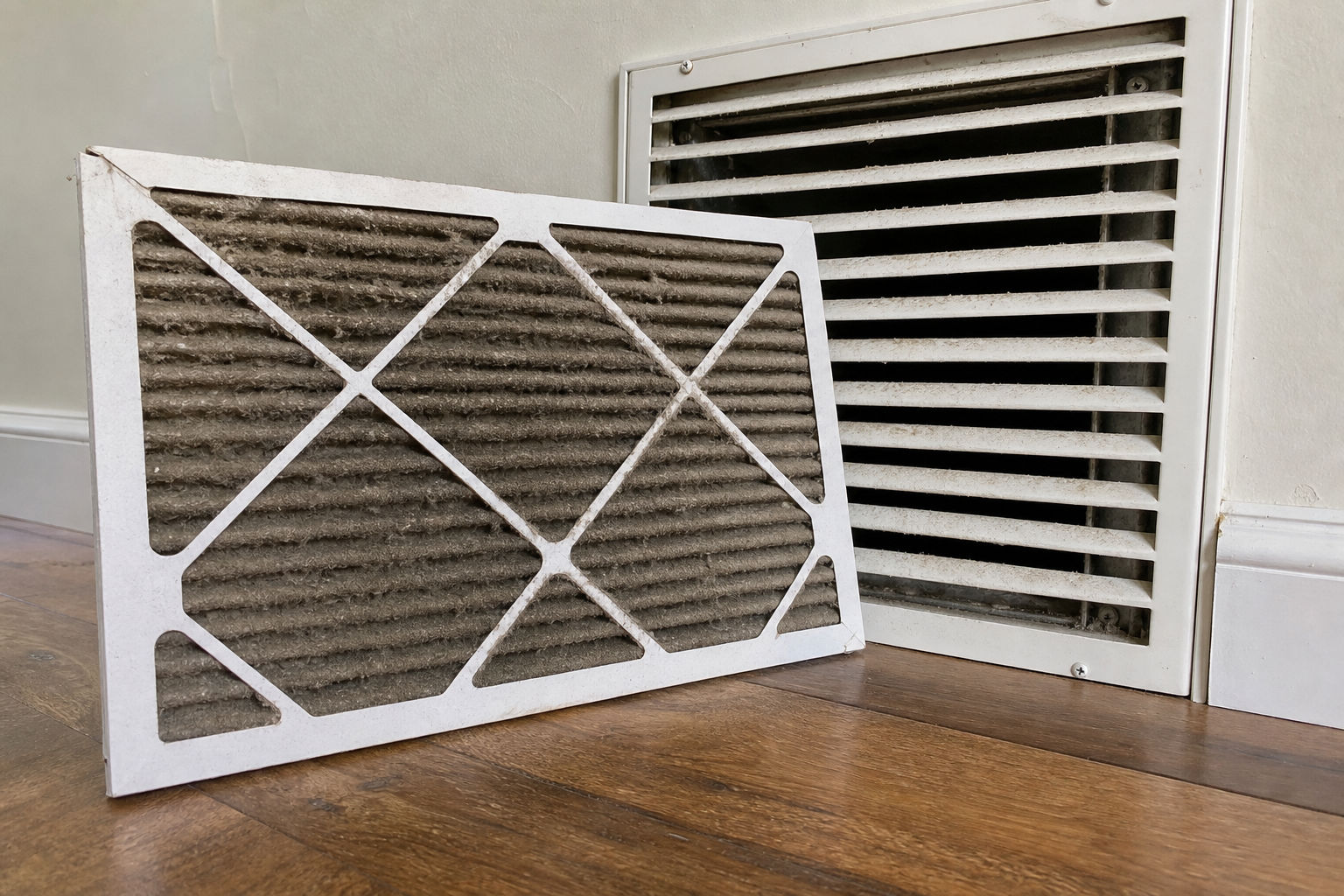
Airflow issues are often repairable, but they should still be addressed quickly. If airflow stays restricted, the evaporator coil can get too cold and begin to freeze, which creates another layer of system stress. If that sounds familiar, see our post on why your AC keeps freezing up in summer and what to do next. Short cycling and freezing can be closely connected, and both deserve prompt service.
Common cause #3: Refrigerant issues
Low refrigerant can also lead to short cycling. When refrigerant charge is incorrect, the system cannot absorb and move heat the way it should. That can trigger pressure-related shutdowns, poor cooling, coil freezing, and repeated restarts. Refrigerant problems are not a simple maintenance item; they usually point to a leak, an improper prior repair, or another system fault that needs trained diagnosis. If your AC is short cycling and cooling performance is dropping at the same time, refrigerant should be on the list of possibilities.
Common cause #4: An oversized AC system
Sometimes the issue is not wear or damage but system sizing. An oversized air conditioner can cool the thermostat area too quickly and shut off before the rest of the property is properly conditioned. That sounds efficient, but it usually is not. The system may run in brief bursts, leave humidity behind, and create uneven comfort throughout the building. This is especially noticeable in Charleston-area summers, when humidity control matters almost as much as temperature.
If short cycling has been present since installation, or if a recent replacement never seemed to run quite right, oversized equipment may be part of the problem. In that case, a repair may help symptoms temporarily, but it may not solve the underlying design issue. Our local article on whether to repair or replace your AC in 2026 explains how age, condition, and performance problems can guide that decision.
Other possible causes professionals check
Short cycling can also be caused by electrical faults, dirty condenser coils, failing capacitors, control board issues, high head pressure, or safety switches doing their job because another part of the system is outside normal range. Drain issues may contribute in some systems as well. For commercial spaces and larger homes, zoning problems or duct design issues can add complexity. That is why accurate testing matters more than guessing. The symptom may look simple, but the root cause is not always obvious.
When it is likely a repair issue
Many short cycling problems can be resolved with repair when the equipment is otherwise in solid condition. Examples include thermostat replacement, electrical repairs, coil cleaning, correcting airflow restrictions, addressing a drain safety issue, or fixing a refrigerant leak and restoring proper charge. If the unit has generally cooled well until recently, and the system is not near the end of its service life, repair is often the logical first step. Ongoing maintenance also helps reduce the chance of repeat issues. Our post on keeping your AC running reliably through a Charleston-area summer covers practical ways to stay ahead of seasonal strain.
When it may point to a larger system problem
If the system is older, has had repeated breakdowns, struggles with humidity, or has never cooled evenly, short cycling may be a sign of a broader problem rather than a one-time repair. Oversized equipment, poor duct design, declining compressor performance, or a history of refrigerant issues can change the conversation. Property owners in Isle of Palms, Sullivan's Island, and Folly Beach often deal with harsh coastal conditions that can accelerate wear and expose existing weaknesses faster. In those cases, a full evaluation of the system may be more useful than focusing on one symptom alone.
What to do if your AC is short cycling
- Check the thermostat setting and replace batteries if needed
- Inspect the air filter and replace it if it is dirty
- Confirm vents and returns are open and unobstructed
- Turn the system off if you notice ice, burning smells, or repeated hard starts
- Schedule professional diagnosis before the issue causes more wear
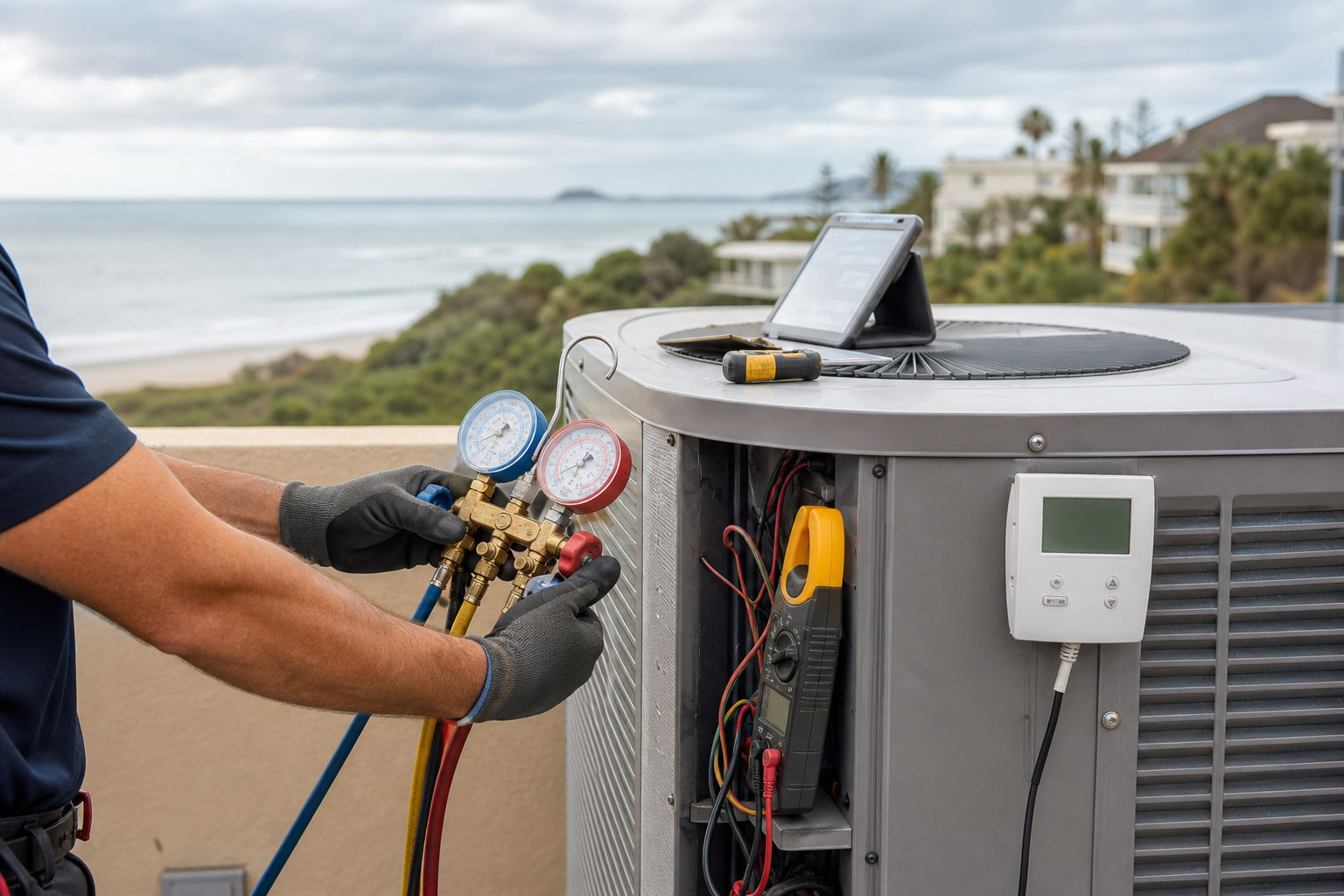
Avoid continuing to force the system to run if it is obviously struggling. Repeated starts are hard on major components, especially the compressor. A trained HVAC technician can test airflow, refrigerant pressures, controls, electrical parts, and overall system operation to identify the real cause. For homes and businesses across Charleston, North Charleston, Mount Pleasant, Summerville, and nearby communities, prompt service can help restore comfort before a small issue grows into a major interruption.
First Call Heating & Cooling helps local property owners diagnose AC issues quickly and clearly, including short cycling, poor cooling, airflow problems, and larger system performance concerns. Whether the answer is a targeted repair or a broader recommendation based on equipment condition, the goal is the same: reliable cooling, better humidity control, and fewer surprises when summer heat is at its worst.
Source: air conditioning guidance from the U.S. Department of Energy