Why Your Charleston-Area AC Runs Constantly but Still Struggles to Cool
What You'll Learn
- Learn why nonstop AC operation often points to airflow or cooling issues
- Know which thermostat and filter problems you may be able to fix yourself
- Understand when low refrigerant or sizing problems need expert testing
- See how Lowcountry heat affects homes and businesses across the area
When an air conditioner in the Charleston area runs constantly but indoor temperatures still creep upward, the system is usually trying to keep up with a problem rather than simply working harder. In the Lowcountry, long stretches of high heat, humidity, salt air, and heavy summer demand can expose weaknesses quickly. Homeowners in Mount Pleasant, business owners in North Charleston, and property managers in Summerville often notice the same pattern: the AC never seems to shut off, rooms feel sticky, and energy bills rise without better comfort.
Continuous operation does not always mean the unit is failing, but it does mean the system deserves attention. Sometimes the cause is straightforward, such as a clogged filter or a thermostat setting issue. In other cases, the problem involves low refrigerant, leaky ductwork, a struggling blower, or equipment that was never properly sized for the building. If your system is also turning on and off too frequently, our article on why your Charleston-area AC is short cycling and what it could mean can help you compare symptoms.
Why nonstop AC operation matters
An AC that runs for long periods on the hottest afternoons is not unusual. But if it runs nearly nonstop in moderate conditions, cannot reach the thermostat setting, or leaves the space humid and unevenly cooled, efficiency and reliability are already being affected. The longer a system struggles, the more wear it places on components like the blower motor, capacitor, compressor, and contactor. For homes and commercial spaces alike, that can mean higher utility costs now and more expensive repairs later.
In coastal communities such as Isle of Palms and Sullivan's Island, the challenge can be even greater because humidity control is just as important as temperature reduction. If the system cannot move enough air or remove enough heat, the building may feel uncomfortable even when the thermostat reading looks close to normal.
Common cause #1: Airflow restrictions
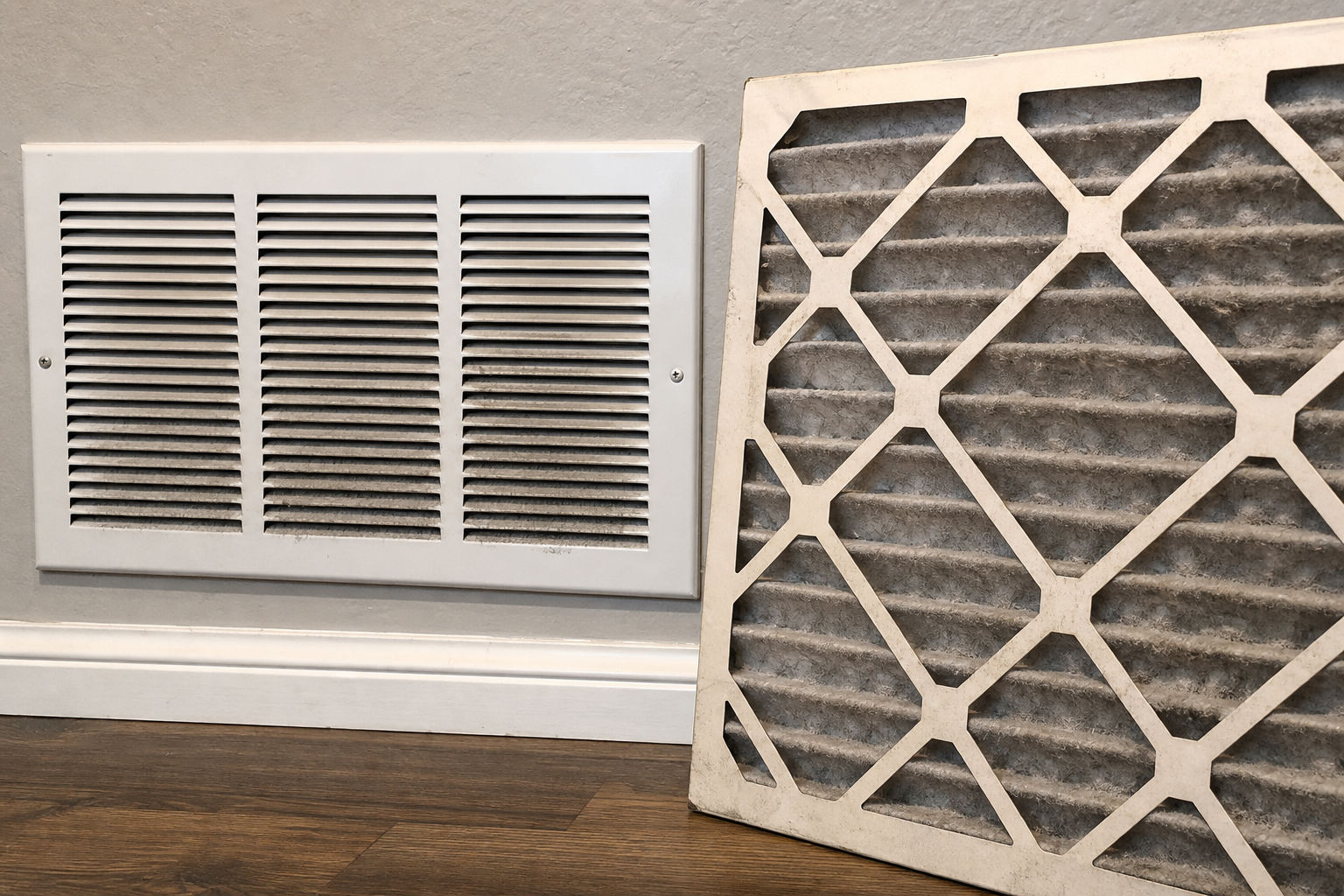
Restricted airflow is one of the most common reasons an AC runs constantly and still underperforms. Your system depends on steady air movement across the evaporator coil and through the duct system. If that airflow is reduced, the AC cannot absorb and carry away heat efficiently. Common causes include a dirty air filter, blocked return grilles, closed supply vents, a dirty indoor coil, collapsed flex duct, or a blower assembly coated with dust.
- Check whether the air filter is overdue for replacement
- Make sure furniture, rugs, or boxes are not blocking return vents
- Confirm that supply registers are open in the rooms you want cooled
- Notice whether airflow feels weak from multiple vents, not just one
Simple airflow fixes can help if the issue is limited to a dirty filter or blocked vent. However, weak airflow throughout the property often points to a deeper problem inside the air handler or ductwork. If the system is also icing over, that is a sign to stop guessing and review why your AC keeps freezing up in summer and what to do next, then schedule professional service.
Common cause #2: Thermostat problems or settings
Sometimes the air conditioner is doing exactly what the thermostat is telling it to do. A thermostat set too low during extreme heat may cause the system to run for very long cycles without ever reaching the target temperature. Placement also matters. If the thermostat sits near direct sunlight, a kitchen, or a heat-producing office area, it may read warmer than the rest of the building and keep calling for cooling longer than necessary.
Battery issues, calibration drift, programming errors, and faulty sensors can all create misleading readings. For business owners, commercial scheduling mistakes can be especially costly if the system is set to cool an empty space all day and still cannot keep up once occupancy rises. Before assuming a major mechanical problem, verify the mode, fan setting, schedule, and temperature reading. The fan should usually be set to auto rather than on if you want normal cooling cycles and better humidity control.
Common cause #3: Low refrigerant or a refrigerant leak
Refrigerant is what allows your AC to absorb indoor heat and release it outside. If the charge is low, the system may run continuously, cool poorly, and sometimes freeze at the indoor coil. Low refrigerant does not get "used up" like fuel. If levels are low, there is usually a leak that needs to be located and repaired before the charge is corrected.
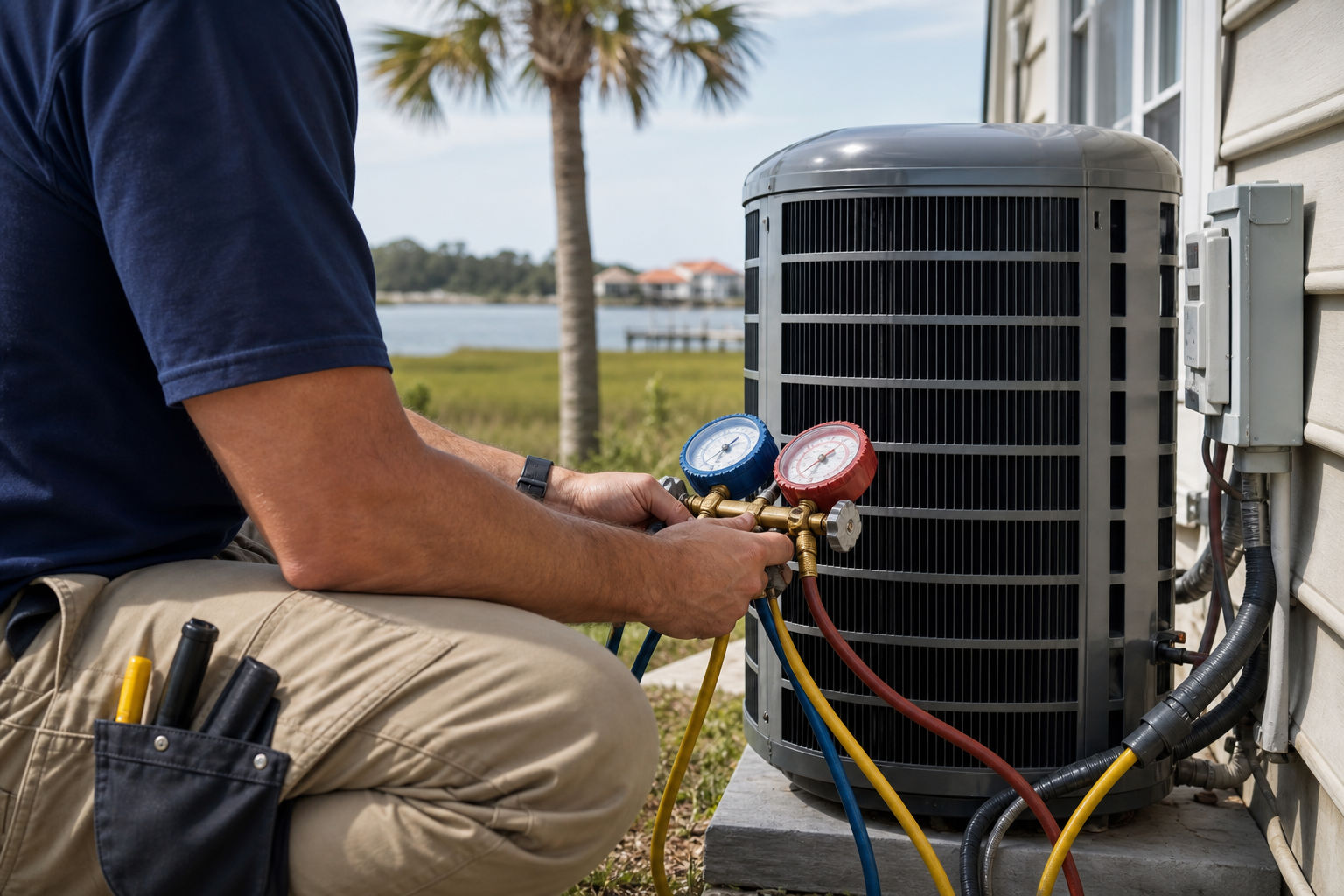
Warning signs can include warm supply air, hissing near refrigerant lines, ice on the indoor or outdoor unit, and steadily worsening performance. This is not a DIY fix. Refrigerant issues require gauges, temperature measurements, leak detection, and safe handling procedures. In Charleston, James Island, and Goose Creek, where systems may be exposed to long cooling seasons and harsh outdoor conditions, refrigerant-related issues are common enough that professional testing is worth it sooner rather than later.
Common cause #4: Undersized equipment or high heat load
Not every nonstop AC problem is caused by a repair issue. Sometimes the equipment is simply too small for the space or for the way the space is being used. That can happen in older homes after additions, in renovated offices with more electronics and occupants, or in buildings with poor insulation, aging windows, or significant air leakage. An undersized system can run almost continuously on hot days and still fail to maintain comfort.
Lowcountry conditions amplify the effect. Solar gain, attic heat, humidity, and frequent door openings can all increase the cooling load. If your AC has always struggled in peak summer despite regular maintenance, sizing and load calculations should be part of the conversation. Our guide on whether to repair or replace your AC in 2026 is useful if you are weighing continued repairs against a properly matched replacement system.
Other issues that can keep an AC running too long
Several other problems can create the same symptom. A dirty outdoor condenser coil can prevent heat from leaving the system efficiently. Leaky ducts in an attic or crawlspace can send cooled air where you do not need it. A weak capacitor or failing blower motor can reduce performance without stopping operation entirely. In some cases, the system is technically cooling, but poor maintenance has reduced capacity enough that it cannot keep pace with Charleston summer demand.
Preventive service often catches these issues before they turn into emergency calls. For a broader view of seasonal upkeep, read how to keep your AC running reliably through a Charleston-area summer and how to know when your HVAC system needs repair, maintenance, or replacement.
What you can check before calling
- Replace the air filter if it is dirty or overdue
- Verify thermostat settings, schedule, and battery condition
- Check that return and supply vents are open and unobstructed
- Look for ice buildup, unusual sounds, or water around the unit
- Note whether the problem affects the whole property or specific rooms
These steps may solve minor issues or at least give useful information for a technician. What you should not do is continue forcing a struggling system to run day after day while comfort worsens. That often leads to more component stress and can turn a manageable repair into a larger one.
When to schedule professional diagnostics
Call for service if the AC runs constantly and still cannot reach set temperature, if airflow is weak from multiple vents, if you see ice, or if utility costs suddenly spike without another explanation. Professional diagnostics can confirm whether the issue is airflow, thermostat control, refrigerant charge, electrical performance, duct leakage, or equipment sizing. That matters because the right fix depends on the real cause, not the symptom.
For homeowners and business owners in Charleston, West Ashley, Daniel Island, Johns Island, and surrounding communities, a careful evaluation can prevent repeat breakdowns and help restore comfort faster. First Call Heating & Cooling provides air conditioning repair and HVAC service with a focus on identifying the underlying problem, not just treating the immediate complaint.
Source: air conditioning efficiency guidance