What to Expect From a 24/7 Emergency AC Repair Visit in the Charleston Area
What You'll Learn
- Know which AC problems call for immediate after-hours service
- See what technicians usually inspect first during emergency visits
- Prepare the right details before the truck arrives
- Understand likely outcomes from quick fixes to replacement advice
When your air conditioner stops working at 9 p.m. in Charleston, starts blowing warm air in Mount Pleasant, or trips off repeatedly during a humid weekend in Summerville, the question is usually the same: Is this an emergency, or can it wait until morning? A 24/7 emergency AC repair visit is designed for situations where comfort, safety, or property conditions can quickly worsen. For homeowners and local business owners, understanding what qualifies as urgent and what a technician is likely to do first can make the process faster, calmer, and more productive.
In the Charleston area, after-hours AC calls often happen during extreme heat, high indoor humidity, electrical concerns, or complete system shutdowns. Emergency service is not just about convenience. It is about reducing risk, protecting equipment from further damage, and restoring cooling when waiting could create a more serious problem for occupants, inventory, electronics, or indoor air quality.
When an AC Problem Becomes an Emergency
Not every AC issue requires a middle-of-the-night repair, but some situations deserve prompt attention. A complete loss of cooling during a heat wave can be urgent, especially for households with infants, older adults, medical vulnerabilities, or pets. Commercial properties may also need immediate service if indoor temperatures affect employees, customers, or temperature-sensitive operations.
- The system will not turn on at all
- The AC is running but blowing warm or barely cool air
- There is a burning smell, sparking, or repeated breaker trips
- Water is leaking heavily indoors or near sensitive areas
- The unit is making loud grinding, banging, or buzzing noises
- The system is short cycling and indoor temperatures are climbing quickly
Some symptoms may seem minor at first but can point to a larger issue. For example, frequent on-and-off operation can strain components and leave the home uncomfortable. If that sounds familiar, our post on why AC short cycling happens explains what may be behind it. Likewise, an air conditioner that runs constantly without reaching the thermostat setting may indicate airflow, refrigerant, or equipment performance problems, which we cover in this guide to an AC that runs constantly but still struggles to cool.
What Technicians Typically Inspect First
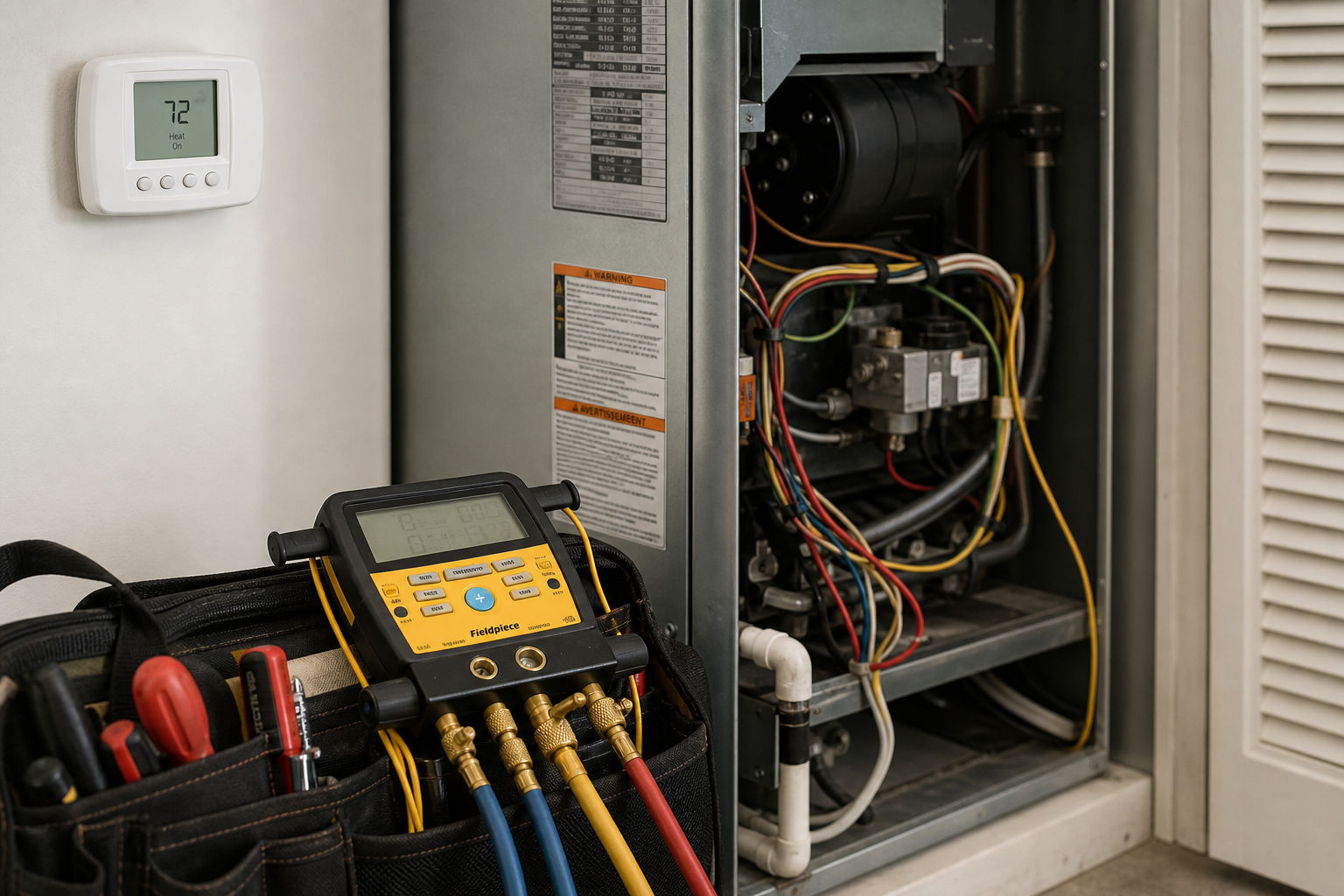
During an emergency AC repair visit, the technician's first goal is usually to confirm the immediate failure point and determine whether the system can be safely restored that night. The process often starts with the basics: thermostat settings, power supply, breaker status, disconnects, visible wiring issues, and whether the indoor and outdoor units are both responding properly.
From there, technicians typically check airflow and heat transfer. That can include inspecting the air filter, evaporator coil condition, blower operation, return and supply temperature differences, and the outdoor condenser. If the system is frozen, airflow restrictions or refrigerant-related issues may be suspected. If your unit has been icing up, you may also want to review why AC systems freeze up in summer, because that symptom often changes how an after-hours call is handled.
- Confirm the complaint and current indoor conditions
- Check thermostat operation and electrical power
- Inspect the air handler, blower, and filter
- Evaluate the outdoor condensing unit
- Test key components such as capacitors, contactors, or motors
- Measure system performance to identify likely root causes
In many cases, the issue is a failed electrical component, clogged drain safety shutdown, restricted airflow, or another repair that can be addressed on the spot. In other cases, the technician may find a larger problem such as a compressor issue, refrigerant leak, or an aging system with multiple failing parts. The purpose of the emergency visit is to make a sound, informed decision quickly, not to rush into a repair that is incomplete or unwise.
How After-Hours Service Decisions Are Usually Made
After-hours service decisions usually come down to three questions: Can the system be safely operated? Can cooling be restored reliably tonight? Is repair the best next step compared with a larger recommendation? If the answer to all three is yes, the technician may complete a repair immediately. If not, the visit may focus on stabilization, temporary recommendations, or planning the next step during regular hours.
For example, a failed capacitor or contactor may be a straightforward repair. A severely worn compressor, major refrigerant leak, or system at the end of its service life may require a broader discussion. If your equipment is older and the repair is significant, it helps to understand the long-term picture. Our post on whether to repair or replace your AC offers useful context for Charleston-area property owners weighing that decision.
How to Prepare Before the Technician Arrives
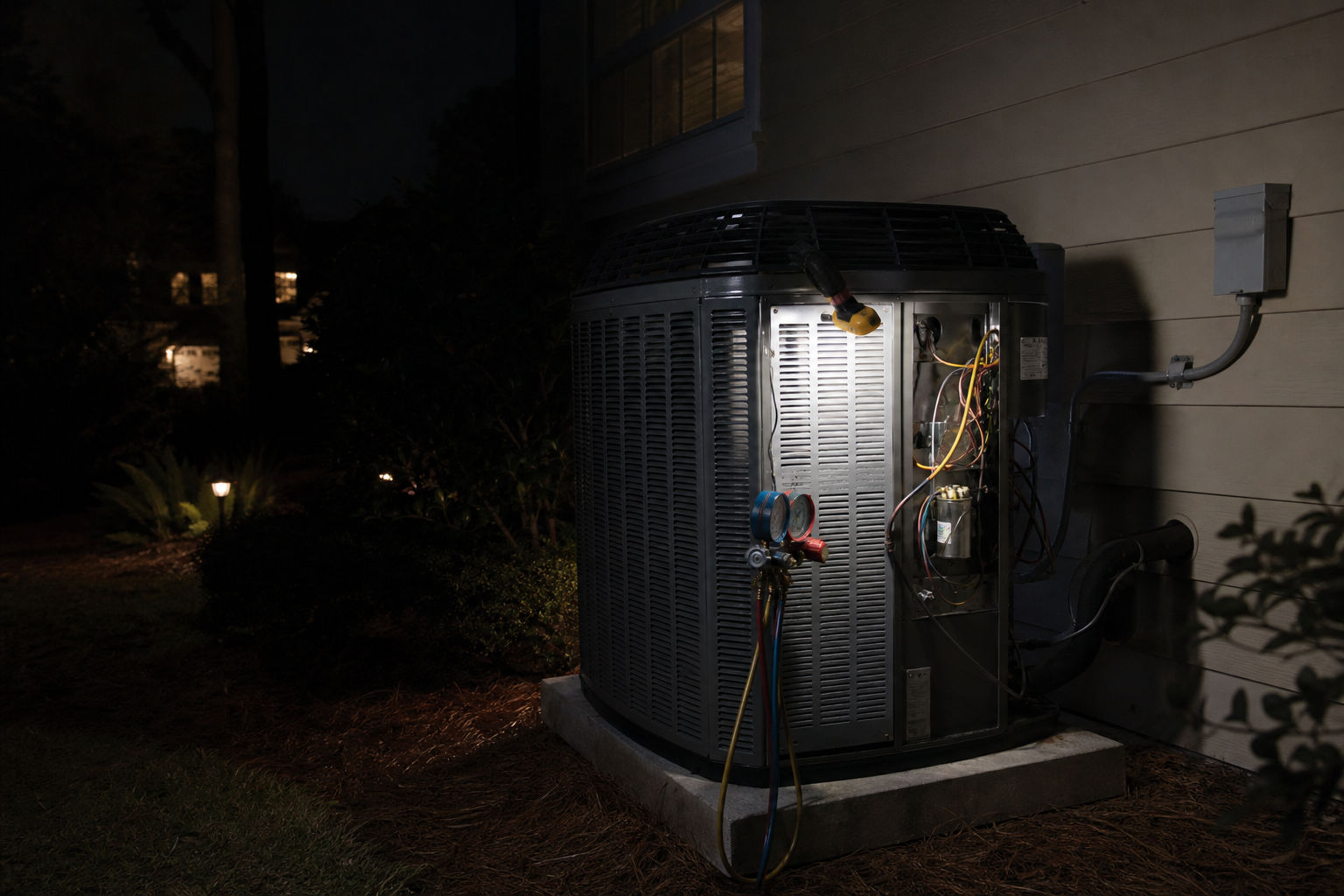
A little preparation can save time during an emergency visit, whether you are in North Charleston, Goose Creek, James Island, or another nearby service area. If it is safe to do so, write down exactly what the system is doing: whether it will not start, whether the fan is running, whether warm air is coming from the vents, when the problem began, and whether there were any warning signs such as unusual sounds, water, or odors.
- The make and approximate age of the system, if known
- The thermostat setting and current indoor temperature
- Any recent repairs, maintenance, or recurring issues
- Whether the breaker has tripped or the unit has frozen
- Access details for gates, pets, parking, or rooftop equipment
Also make sure the technician can reach the equipment easily. Clear the area around the indoor air handler and outdoor condenser if possible. If the system is leaking water near finished flooring or electrical components, take basic protective steps and mention that clearly when you call. If the issue involves a frozen coil, avoid repeatedly restarting the system, since that can complicate diagnosis and increase strain on components.
What Outcomes Are Most Common
Most emergency AC visits end in one of a few common outcomes. First, the technician finds a repairable issue and restores cooling the same visit. Second, the system can be made temporarily safe, but a return visit or additional parts are needed. Third, the inspection shows that replacement should be considered because the equipment condition, repair scope, or age makes further investment difficult to justify.
That last outcome does not mean replacement is automatically required. It means the technician should explain why the recommendation is being made, what repair options exist, and what tradeoffs come with each path. For many property owners in places like West Ashley, Daniel Island, and Johns Island, the best decision depends on system age, repair history, energy performance, and how reliably the unit can make it through the rest of the cooling season.
Once the immediate problem is resolved, prevention becomes the next priority. Regular maintenance, filter changes, drain line care, and timely attention to performance changes can reduce the odds of another late-night breakdown. For a broader planning perspective, see this practical HVAC guide for homeowners and business owners and how to keep your AC running reliably through a Charleston-area summer.
What to Expect From First Call Heating & Cooling
When you request emergency AC repair from First Call Heating & Cooling, the goal is to provide clear communication, careful diagnosis, and practical next-step recommendations for your property. Whether you are dealing with a sudden no-cool issue in Charleston, an after-hours breakdown in Mount Pleasant, or a business comfort problem in Summerville, the most helpful service experience starts with accurate information and a structured inspection process.
Emergency service is ultimately about helping you make the right decision under pressure. Knowing what counts as urgent, what will likely be inspected first, and what outcomes are most common can help you respond with confidence when your AC fails at the worst possible time.
Source: air conditioning guidance from the U.S. Department of Energy