How to Tell if Poor Airflow Is Coming From Your AC, Ductwork, or Thermostat
What You'll Learn
- Spot signs of blower, filter, duct, and thermostat problems
- Use simple checks to narrow down weak airflow at the vents
- Know when uneven cooling points to a bigger HVAC issue
- Understand when professional diagnostics can prevent added costs
When air barely moves from your vents, it is easy to assume the air conditioner itself is failing. In reality, poor airflow can start with the indoor blower, a clogged filter, restricted ductwork, closed dampers, or even thermostat control problems that keep the system from running the way it should. For homeowners and business owners in Charleston, West Ashley, and Summerville, weak airflow often shows up first as rooms that stay stuffy, longer run times, and rising utility costs.
The good news is that you can often narrow down the source without guessing. A few practical checks can tell you whether the issue looks isolated to one room, tied to the whole system, or connected to controls. If some rooms are much warmer than others, you may also want to read Why Some Rooms Stay Hot While the Rest of the House Feels Cool, since uneven temperatures and weak airflow frequently go hand in hand.
Start by figuring out whether the problem affects one vent, one area, or the whole building
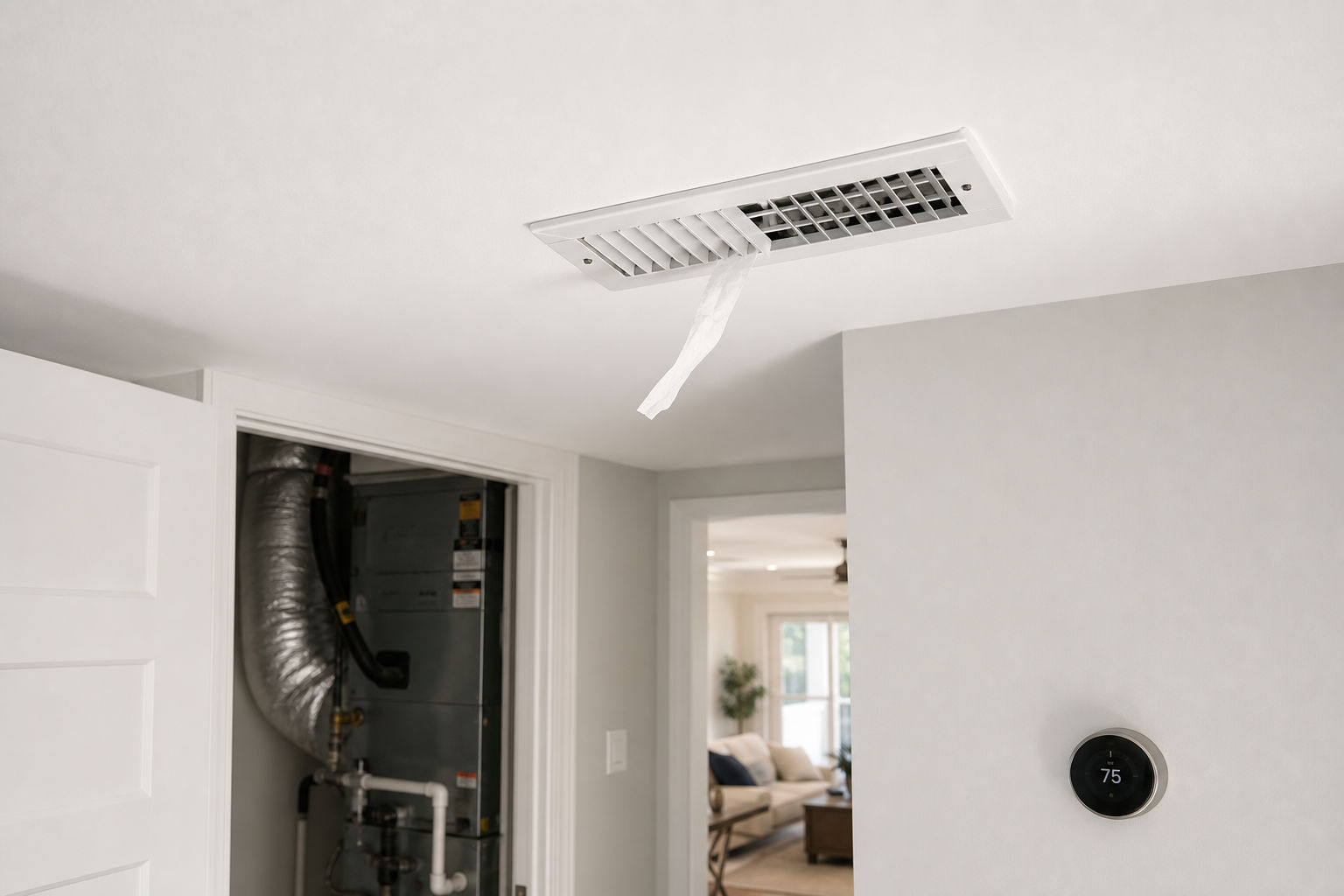
The first step is to compare airflow at multiple supply vents while the AC is actively running. Put your hand near vents in several rooms and note whether the airflow feels weak everywhere or only in specific spaces. If the entire property has low airflow, that points more toward a system-wide issue such as a dirty filter, blower problem, frozen coil, or thermostat operation issue. If just one room or one side of the building is affected, duct restrictions, damper settings, crushed flex duct, or a disconnected branch line become more likely.
- Weak airflow at every vent usually suggests a central system problem
- One hot room often points to a branch duct or balancing issue
- Airflow that changes by time of day can indicate control or demand problems
- A business with multiple zones may have a thermostat or damper issue in one zone
Check the filter first because it is the simplest and most common restriction
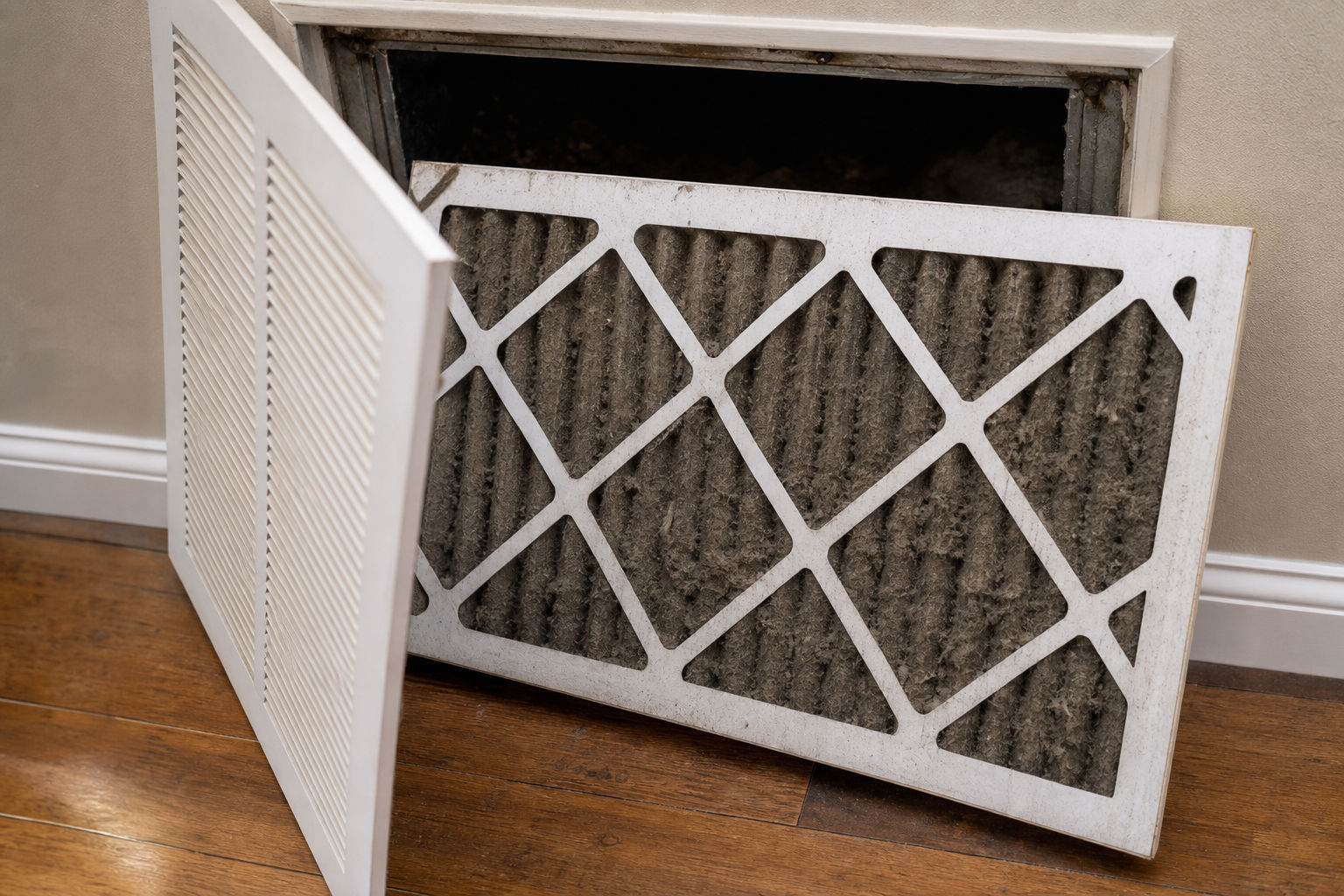
A dirty air filter is one of the most common reasons airflow drops. As the filter loads with dust and debris, the blower has to work harder to pull air through the return side of the system. That can reduce air volume at the vents, stress the blower motor, and in some cases contribute to coil freezing. If your AC has started running longer while producing less air, inspect the filter before assuming you need major repairs.
Remove the filter and look for visible buildup, discoloration, or a surface packed with dust. Also make sure the filter is the correct size and installed in the right direction. An overly restrictive filter can create airflow complaints even when it is new. If replacing the filter improves airflow quickly, you may have caught the problem early. If it does not, the restriction may be deeper in the system and should be evaluated further.
Look for signs the indoor blower is not moving enough air
The blower is the part of the indoor unit that pushes conditioned air through the duct system. If the blower wheel is dirty, the motor is failing, the capacitor is weak, or the fan speed is not set correctly, airflow can drop throughout the building. This often feels like the system is on, but not delivering enough air to cool the space effectively.
Common clues include a noticeable humming sound, weak air at every vent, longer cooling cycles, and indoor comfort that never quite catches up on hot afternoons in James Island or Johns Island. In some cases, you may also hear unusual sounds from the air handler. If that is happening, What Strange AC Noises Mean and When to Call for Repair can help you understand whether the sound points to a motor or airflow-related issue.
Pay attention to ductwork clues when only certain rooms have poor airflow
If airflow is weak in only one room, one suite, or one side of the property, the duct system deserves a closer look. Duct problems can include disconnected runs, crushed flexible duct, leaking joints, closed balancing dampers, blocked return pathways, or undersized duct design. In older homes and light commercial spaces around Charleston, these issues are not unusual, especially after renovations or other work in attics and crawlspaces.
You can start with visible checks. Make sure supply registers are open and not blocked by furniture, inventory shelving, or rugs. Confirm return grilles are not covered. If one area has always struggled while the rest of the building cools normally, the issue may be airflow balancing rather than an AC failure. If the problem appeared suddenly, a duct restriction or separation is more likely than a design issue.
Coastal conditions can also make HVAC systems work harder over time. Salt air, humidity, and long cooling seasons in the Charleston area can contribute to wear that affects overall system performance. For more context, see How Salt Air and Coastal Humidity Affect AC Performance in Charleston Homes.
Do not overlook thermostat problems that affect airflow complaints
Thermostats do not create airflow directly, but they control when and how the system runs. If the thermostat is misreading temperature, losing power intermittently, programmed incorrectly, or failing to call for the fan properly, you may experience comfort problems that feel like weak airflow. In zoned systems, one thermostat issue can leave a section of the property undercooled even when the rest seems normal.
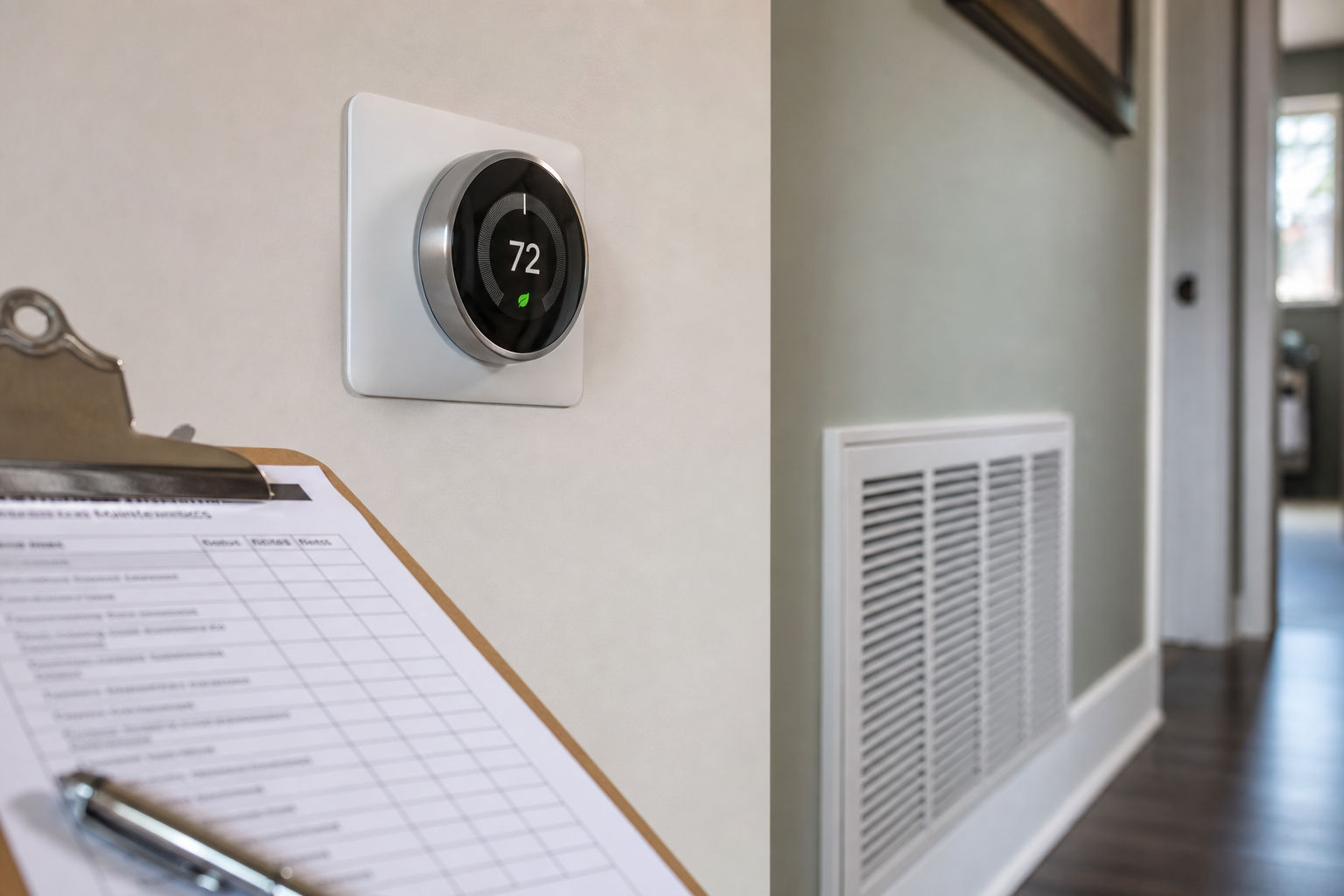
Check that the thermostat is set to cool and the target temperature is below the current room temperature. Replace batteries if your model uses them. Make sure the fan setting is where you intend it to be, and verify the thermostat is not exposed to direct sunlight or other heat sources that can skew its reading. If the system starts and stops unpredictably or one zone never seems to open fully, professional testing may be needed to confirm whether the issue is in the thermostat, control board, or dampers.
Watch for warning signs that weak airflow is becoming a bigger repair issue
Poor airflow is not just a comfort problem. It can increase energy use, create humidity issues, and put extra strain on system components. If your AC is leaking water indoors, icing up, or struggling during long summer run times, airflow restrictions may be part of the cause. You may find it helpful to review Why Your Charleston-Area AC Leaks Water Indoors and What That Usually Means and How to Prepare Your HVAC System for 24/7 Summer Demand in the Charleston Area.
- Rooms stay unevenly cool even after long run cycles
- The system runs more often but comfort keeps getting worse
- Ice appears on refrigerant lines or the indoor coil area
- Airflow dropped suddenly instead of gradually
- Utility bills rise without a clear explanation
When to call for professional HVAC diagnostics
If you have replaced the filter, opened registers, checked thermostat settings, and the airflow is still weak, it is time for a proper diagnostic visit. Measuring static pressure, blower performance, temperature split, duct leakage, and control signals is the fastest way to stop guessing. That is especially important for businesses where uneven cooling can affect employees, customers, equipment, or inventory.
For properties in West Ashley, Summerville, Charleston, James Island, and Johns Island, professional testing can reveal whether the issue is a failing blower assembly, a hidden duct restriction, a frozen evaporator coil, or a thermostat and zoning control problem. If you want a quick pre-check before scheduling service, What Charleston Homeowners Should Check Before Calling for AC Repair is another useful resource.
First Call Heating & Cooling helps local homeowners and business owners diagnose airflow problems accurately so they can restore comfort, reduce wasted energy, and avoid unnecessary wear on the system. When airflow is weak, the right answer is not guesswork. It is finding the actual restriction, control issue, or equipment problem before it leads to bigger repairs.
Source: maintaining your air conditioner