
Why Your Charleston-Area AC Leaks Water Indoors and What That Usually Means
What You'll Learn
- Learn the most common reasons AC systems leak water indoors
- See how Charleston humidity increases condensate drainage stress
- Know when a clog is simple maintenance vs. a repair issue
- Understand which warning signs call for prompt professional service
If your air conditioner is leaking water inside your home or business, it is easy to assume the unit is simply “sweating” because of the heat. In reality, indoor water around an AC system usually means something in the condensate removal process is not working the way it should. For property owners in Charleston, West Ashley, Summerville, James Island, and Johns Island, this issue is especially common during long stretches of humid weather, when air conditioners pull large amounts of moisture from indoor air every day.
As your system cools the air, moisture condenses on the evaporator coil and drains away through a pan and condensate line. When that path is blocked, overwhelmed, frozen, or mechanically interrupted, water can back up and end up on ceilings, floors, or inside utility closets. Sometimes the fix is basic maintenance. Other times, the leak is a symptom of a larger repair problem involving airflow, refrigerant, or a failing pump.
Why AC systems produce water in the first place
Your AC does more than cool the air. It also removes humidity. In coastal South Carolina, that dehumidification load can be significant, especially in older homes, busy commercial spaces, and properties where doors open frequently. The wetter the air, the more condensate your system has to collect and move out safely. That is one reason Charleston-area systems can be more prone to drainage issues than systems in drier climates. If you want a deeper look at the local climate effect, see How Salt Air and Coastal Humidity Affect AC Performance in Charleston Homes.
When everything is working correctly, you should never see that moisture indoors. The water should drip into the drain pan, flow through the condensate line, and discharge outside or into a designated drain. Any leak inside the building means that process has been interrupted.
The most common cause: a clogged condensate drain line
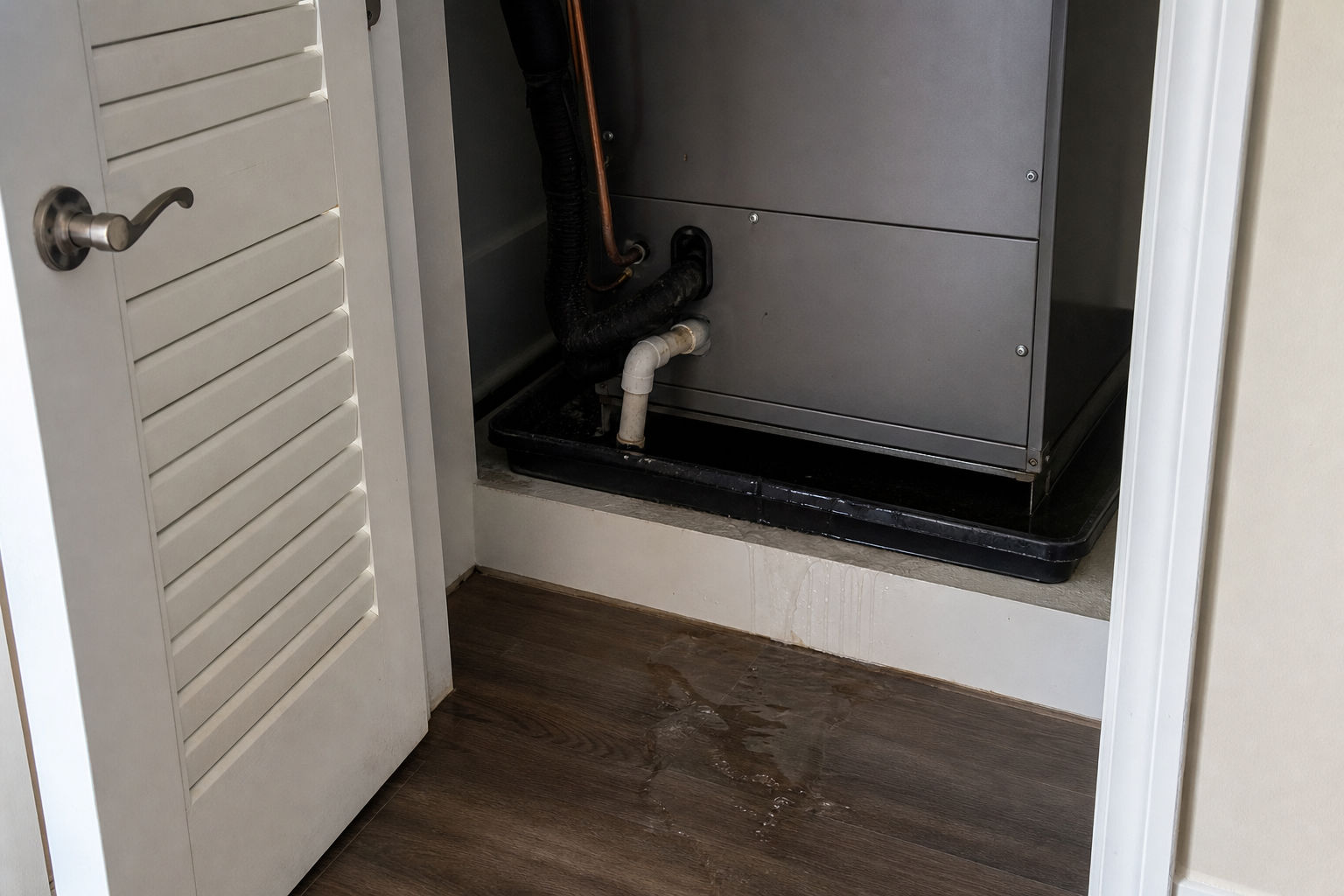
The most frequent cause of an indoor AC water leak is a clogged condensate drain line. Over time, algae, slime, dust, and debris can build up inside the piping. In Charleston’s humid conditions, that buildup can happen faster because the system is generating more moisture for longer periods. Once the line narrows or blocks completely, the drain pan begins to fill. Eventually, the water overflows into the surrounding area.
A clogged drain line may start as a maintenance issue, but it can still create serious damage if ignored. Water can stain drywall, warp flooring, damage insulation, and contribute to mold growth around the air handler. Some systems have a float switch that shuts the unit off before overflowing, but not every setup is equally protected, and switches can fail too.
- Water pooling near the indoor air handler
- The system shutting off unexpectedly during humid weather
- A musty smell near the unit or supply vents
- Visible rust or standing water in the auxiliary drain pan
Frozen evaporator coils can cause leaking after the ice melts
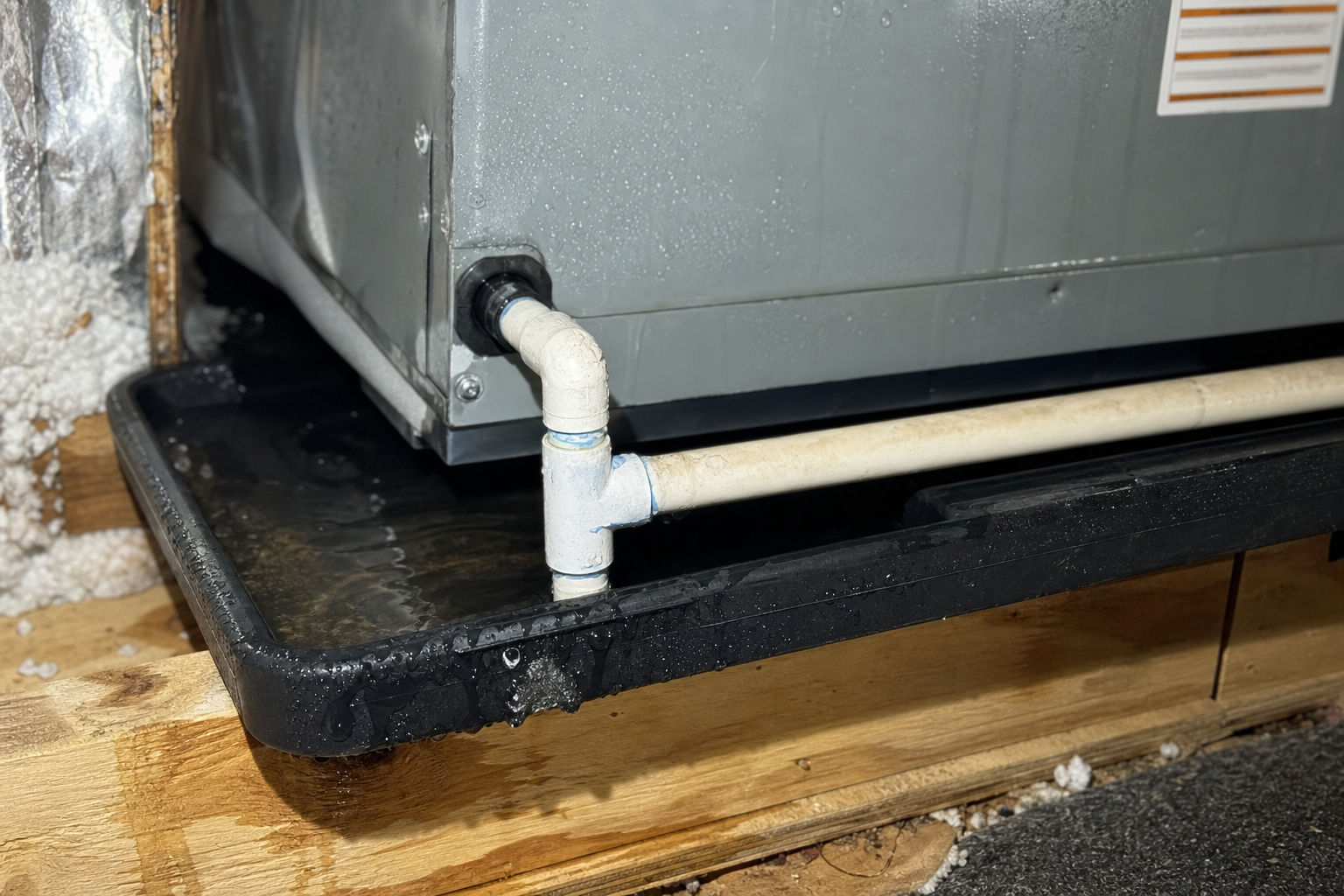
Another common reason an AC leaks water indoors is a frozen evaporator coil. At first, that may sound unrelated to a water leak, but the sequence is straightforward: the coil freezes, ice builds up, cooling performance drops, and then the ice melts faster than the drain system can handle. The result can be noticeable water around the unit.
Frozen coils are usually caused by restricted airflow or refrigerant problems. A very dirty air filter, blocked return air, closed-off vents, blower issues, or a low refrigerant charge can all make the coil temperature drop too far. If some rooms are uncomfortable before the leak appears, airflow imbalance may be part of the story. Related comfort issues are discussed in Why Some Rooms Stay Hot While the Rest of the House Feels Cool.
This is where the line between maintenance and repair becomes important. Replacing a clogged filter is simple. But if the coil keeps icing up, airflow components may need service, or the system may have a refrigerant leak that requires professional diagnosis and repair. Running the unit in that condition can strain the compressor and lead to a much bigger problem.
Condensate pump problems in closets, attics, and retrofit systems
Many homes and light commercial properties use a condensate pump when gravity drainage is not practical. This is common in installations where the indoor unit sits in a location that cannot drain directly outside. The pump collects condensate and pushes it to the proper discharge point. If the pump fails, loses power, sticks, or its reservoir switch malfunctions, water can overflow indoors.
Pump issues usually point to a repair need, not just routine upkeep. While the reservoir may need cleaning, a failing motor, bad float mechanism, disconnected tubing, or wiring problem should be inspected and corrected before the system is put back into regular use. In humid areas like Summerville and Charleston, a nonworking pump can lead to indoor water damage quickly because the system may be removing moisture almost constantly.
Other causes that should not be overlooked
Though drain clogs, frozen coils, and pump failures are the most common culprits, other issues can contribute to indoor leaks. A cracked or rusted drain pan can allow water to escape even if the line is open. Poor installation pitch can prevent proper drainage. A disconnected drain fitting can send water into the cabinet. In rare cases, heavy system contamination or severe biological growth can repeatedly interrupt drainage and create persistent odor concerns, especially if you have also noticed startup smells. For that symptom, see Why Your AC Smells Musty When It Turns On and What It May Signal.
When to try basic checks and when to call for AC repair
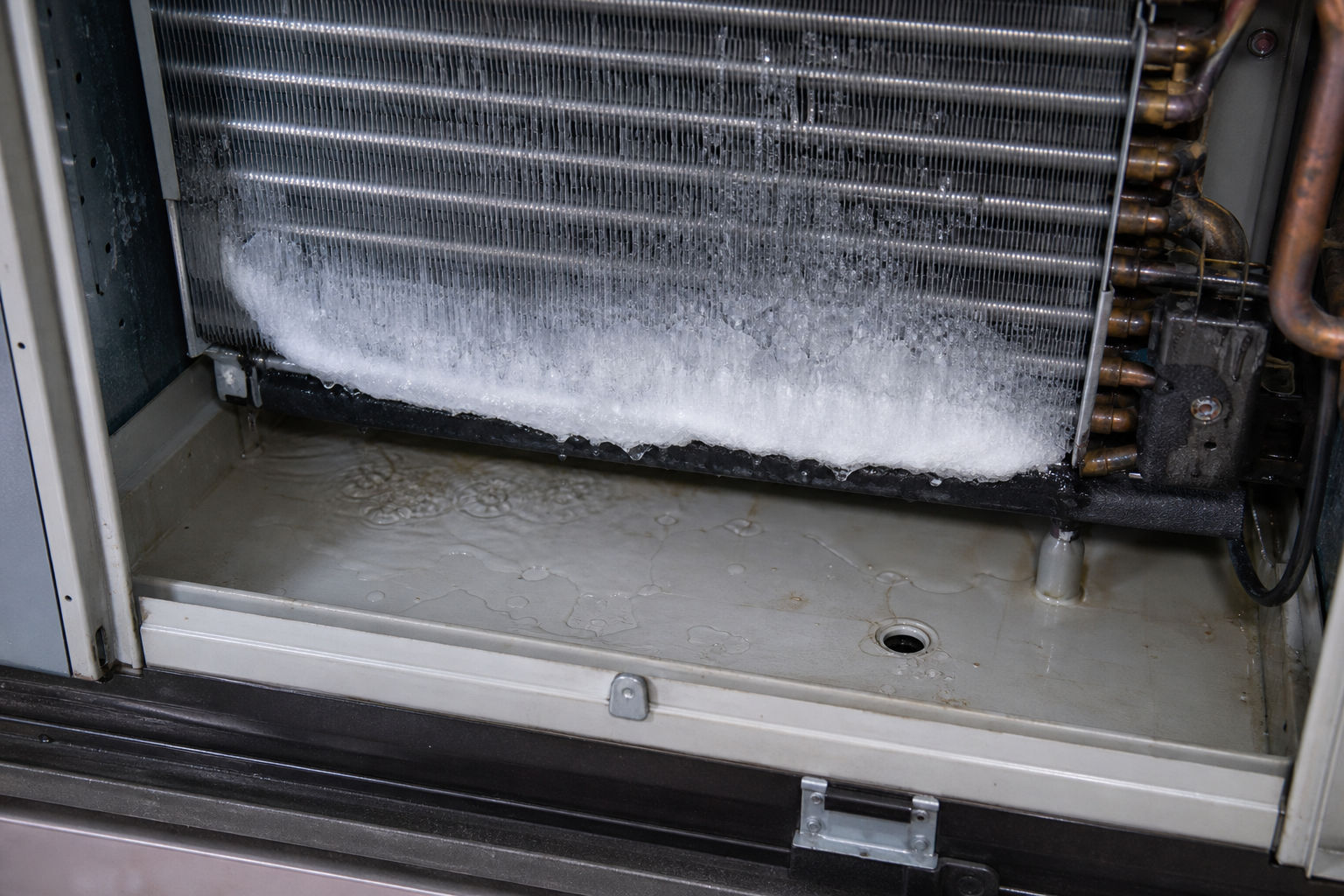
Property owners can safely check a few basics before scheduling service. Start by turning the thermostat to off if water is actively leaking. Replace a dirty filter if needed. Look for obvious standing water around the indoor unit and check whether the drain pan appears full. If you are not sure what is safe to inspect, What Charleston Homeowners Should Check Before Calling for AC Repair is a helpful reference.
However, you should call for professional repair if the leak returns after a basic cleanup, the system has frozen up, the unit is short-cycling, the condensate pump is not working, or you suspect refrigerant or blower trouble. You should also call if the leak is affecting ceilings, walls, or electrical components. Water around HVAC equipment is not something to put off in the middle of a Charleston summer, when systems are already under heavy strain. Preventive service matters even more during peak season, as covered in How to Prepare Your HVAC System for 24/7 Summer Demand in the Charleston Area.
Why local humidity makes fast action important
In drier regions, a minor drainage problem may take longer to become obvious. In the Charleston area, high humidity means your AC can produce a surprisingly large amount of condensate in a short time. That extra load increases the chance that a partially restricted line, weak pump, or marginal pan issue turns into an indoor leak. Homes in West Ashley and Johns Island, as well as restaurants, offices, and retail spaces near the coast, often feel that burden first during long hot spells.
The practical takeaway is simple: indoor AC water should never be ignored. A small puddle can be the first sign of a drainage blockage, an airflow problem, or a repair need that will worsen if the system keeps running. Prompt diagnosis protects your equipment, your indoor air quality, and the surrounding structure.
Get the source of the leak identified before damage spreads
For homeowners and business owners in Charleston, James Island, Summerville, West Ashley, and Johns Island, the right response is to address the cause of the leak, not just mop up the water. First Call Heating & Cooling helps identify whether the issue is a clogged condensate line, a frozen coil, a condensate pump failure, or another AC repair concern. The sooner the source is found, the better your chances of avoiding larger equipment problems and interior water damage.
Source: central air conditioning guidance