How to Know When Your HVAC System Needs Repair, Maintenance, or Replacement
What You'll Learn
- Spot common signs of HVAC trouble before breakdowns happen
- Understand when maintenance can solve comfort issues
- Know which symptoms point to a needed repair
- Learn when replacement is the smarter long-term move
- Make better local HVAC decisions for home or business
When your HVAC system starts acting up, the biggest question is usually not whether something is wrong, but what kind of service makes the most sense. Some issues call for routine maintenance. Others need a targeted repair. And in certain cases, replacement is the more practical investment. For homeowners and local business owners in the local area, knowing the difference can help you avoid unnecessary expenses, reduce downtime, and keep your indoor environment comfortable through changing weather.
A heating and cooling system often gives warning signs before it fails completely. Paying attention to those signs can help you act early instead of waiting for an emergency. If you have already been thinking about system performance, efficiency, or long-term planning, our post How to Make Smarter HVAC Decisions for Your Home or Business in 2026 offers a helpful big-picture look at how to evaluate your options.
Signs Your HVAC System Likely Needs Repair
Repairs are often the right choice when the system is still structurally sound but one component is no longer working correctly. Common examples include a faulty capacitor, worn contactor, clogged drain line, bad thermostat, blower motor issue, or refrigerant-related problem. If your system turns on but does not cool or heat properly, cycles too often, makes unusual noises, or causes a sudden jump in energy usage, a repair may be enough to restore normal operation.
Other repair signals include warm air from the vents when cooling is on, weak airflow in part of the building, water leaking near the indoor unit, strange odors, buzzing or rattling sounds, and short cycling. For property owners in Charleston, Mount Pleasant, and Summerville, these symptoms can worsen quickly during heavy seasonal demand, especially when the system is already under strain.
One issue many property owners notice in summer is an evaporator coil that freezes up. That does not automatically mean you need a new unit, but it does mean the system needs attention. Causes can range from airflow restrictions to refrigerant issues. If that sounds familiar, read Why Your AC Keeps Freezing Up in Summer and What to Do Next for a closer look at what may be happening.
When Maintenance Is the Right Solution
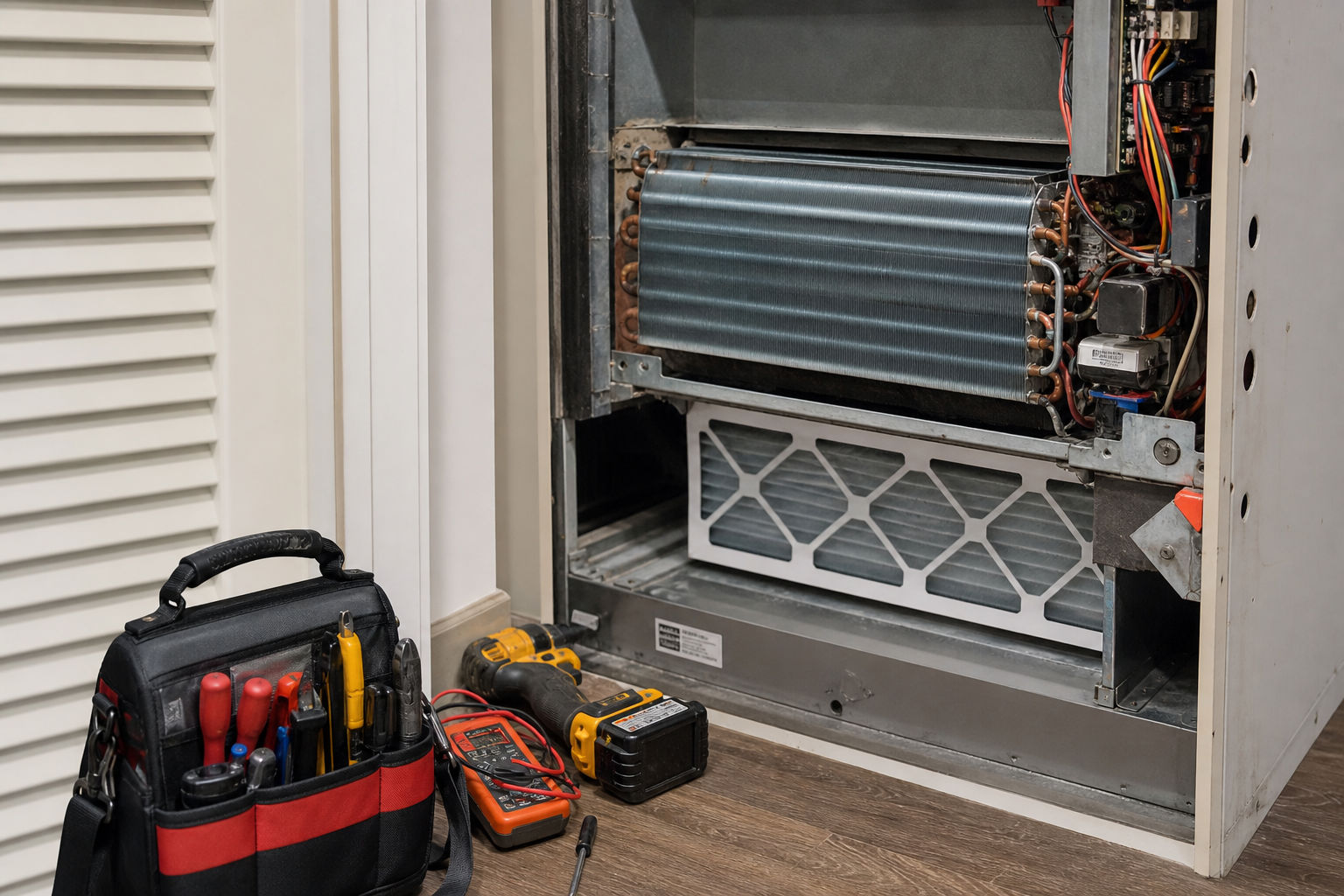
Not every HVAC concern means something is broken. In many cases, the system simply needs professional maintenance to perform as intended. Seasonal tune-ups help clean critical components, verify safe operation, check refrigerant levels where applicable, tighten electrical connections, test controls, and identify wear before it becomes a larger repair. If your system still runs but seems less efficient, less consistent, or slower to reach the set temperature, maintenance may be the best next step.
Maintenance is especially important if you have noticed gradually rising utility bills, more dust indoors, inconsistent airflow, or longer run times. These are often signs of reduced efficiency rather than outright failure. A neglected system can appear to be on the verge of replacement when it really needs cleaning, calibration, and minor service. For a broader overview of preventive care, see How to Keep Your HVAC System Reliable, Efficient, and Ready for Every Season.
- Your system is heating or cooling, but not as efficiently as before
- Energy bills are climbing without a major change in usage
- Airflow feels weaker, but the equipment still runs consistently
- You have missed recent tune-ups or filter changes
- There are no major breakdown symptoms, only declining performance
How to Tell When Replacement May Be the Better Choice
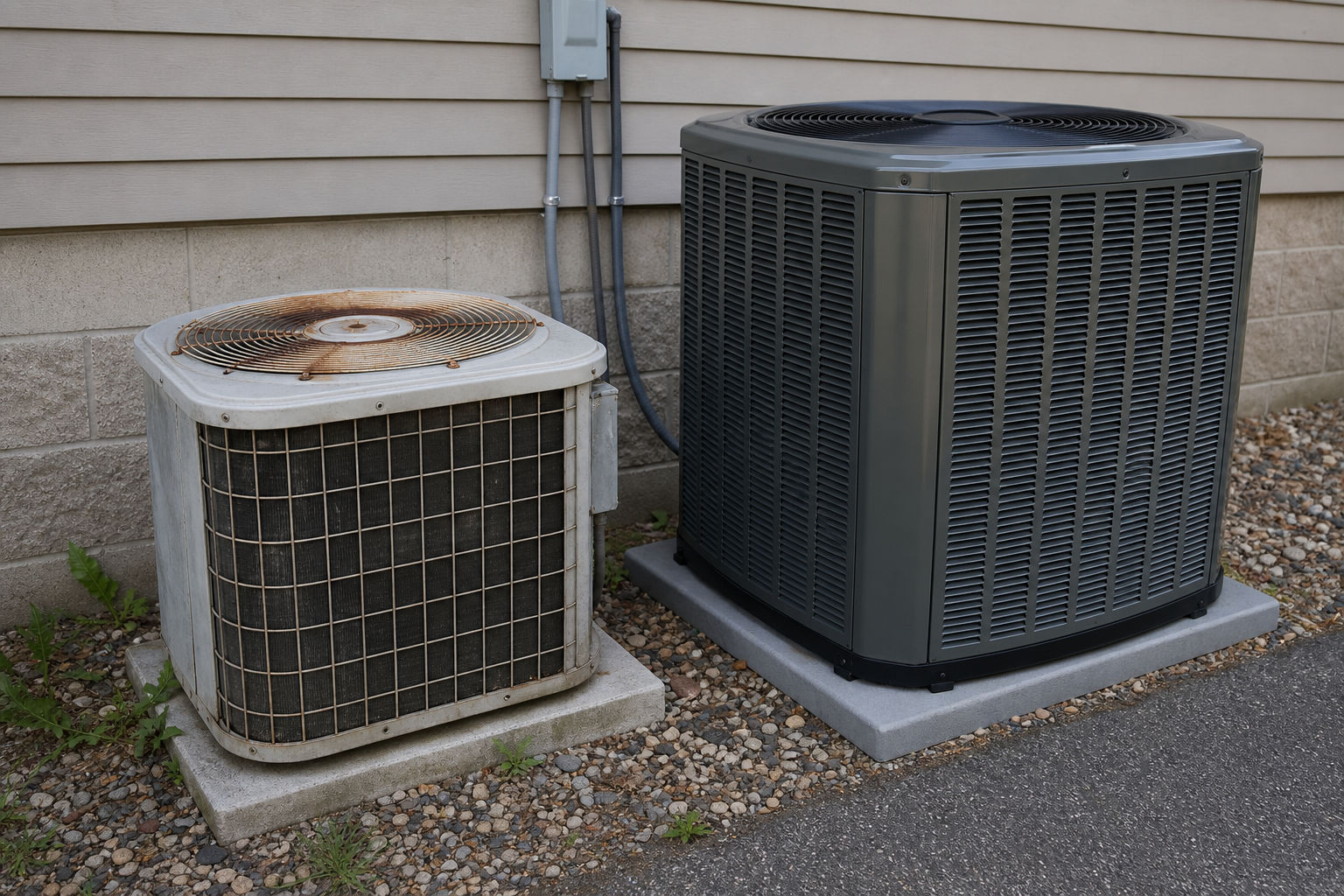
Replacement becomes a more serious consideration when the system is older, less efficient, increasingly unreliable, or facing expensive repairs. Age alone does not determine the answer, but it matters. If your HVAC equipment is well into its service life and you are dealing with repeated repairs, uneven comfort, high energy bills, or difficulty finding replacement parts, it may be time to compare the cost of continued service against the benefits of installing a newer system.
In many local properties, replacement makes sense when comfort problems affect daily life or business operations. For example, if a retail space in North Charleston cannot maintain customer comfort or a home office in West Ashley has hot and cold spots throughout the day, a newer properly sized system may solve issues that repeated repairs cannot fully correct. If you are weighing that decision, Should You Repair or Replace Your AC in 2026? A Local Guide for Charleston-Area Property Owners offers a more focused breakdown.
Replacement may also be the best option if your current system uses outdated technology, struggles through peak summer or winter conditions, or requires a major repair on top of years of declining efficiency. In those cases, continued spending can become reactive rather than strategic. The goal is not just to get the system running today, but to make a sound decision for the next several years.
Questions to Ask Before Choosing Repair, Maintenance, or Replacement
If you are unsure which path is right, start with a practical evaluation. Ask: How old is the system? Has it needed frequent service recently? Are utility costs rising? Is comfort consistent throughout the property? Did the issue appear suddenly, or has performance been declining over time? A trustworthy inspection should help you understand not just what is wrong, but why it is happening and what your options are.
- Consider the age and overall condition of the equipment
- Compare the current repair need with recent service history
- Look at comfort, airflow, and humidity performance across the property
- Evaluate operating costs, not just the immediate service bill
- Ask whether the issue is isolated or part of a larger pattern
It also helps to think seasonally. A minor issue caught early in spring or fall may be resolved with maintenance or a modest repair. The same issue ignored until the hottest week of the year can lead to a complete breakdown. If your priority is avoiding mid-season disruption, our article How to Keep Your AC Running Reliably Through a Charleston-Area Summer shares practical ways to reduce the risk of surprise failures.
Why Local Evaluation Matters
Local climate, building design, insulation quality, and usage patterns all affect HVAC performance. A system serving a busy commercial space may age differently than one in a single-family home, even if both are the same age. That is why local context matters when deciding between repair, maintenance, and replacement. Conditions in the local area, including heat, humidity, and seasonal demand, can amplify existing system weaknesses and change how urgently a problem needs to be addressed.
For many property owners, the best decision comes from combining immediate symptoms with long-term operating goals. If you want better comfort, lower utility costs, and fewer emergency calls, it helps to view HVAC service as part of a broader property care strategy. Our post A Local HVAC Guide to Better Comfort, Lower Energy Costs, and Smarter Repair Decisions expands on that approach.
The Bottom Line
If your HVAC system is showing signs of trouble, the right next step depends on the type of symptoms, the age of the equipment, and how reliably it has been performing. Maintenance is often best for declining efficiency and routine wear. Repair makes sense when a specific component or function is failing. Replacement is worth considering when breakdowns become frequent, costs keep adding up, or the system can no longer deliver dependable comfort. A professional inspection can clarify the most cost-effective path and help you make a confident decision for your home or business.
Source: maintaining your air conditioner